
Exploring the best Solent sailing routes from Gosport is one of the greatest pleasures of keeping a yacht at Premier Gosport Marina. Over the years we have skippered thousands of miles through these waters, and every passage teaches us something new about this remarkable stretch of coast. Whether you are a newly qualified Day Skipper planning your first charter or an experienced sailor looking for fresh ideas, these five routes offer something for everyone.
The Solent is one of the most rewarding sailing grounds in the UK. Its double tides, strong tidal streams, and variety of ports and anchorages make every trip a proper passage. Tidal planning is not optional here, it is essential. At springs, the tide can run at up to 4 knots through the Hurst Narrows and past Bramble Bank. Getting the timing right transforms a slog against the tide into a comfortable sail with favourable current. We cover tidal planning in depth on our RYA Day Skipper practical course, and it is a skill you will use every time you leave the berth.
All distances given are from Gosport Marina. Times assume moderate conditions and a cruising speed of 5 knots under power or sail. As always, check the weather, tides, and your own and your crew’s abilities before setting out. For those looking to build passage experience before tackling longer routes, our Mile Building weekends are an excellent way to gain sea time with an experienced skipper on board.
Five classic Solent passages from Gosport marina & Solent sailing routes from Gosport
Route 1: Gosport to Cowes
Distance: 10 nautical miles | Time: Approximately 2 hours | Best tide: Depart HW Dover -4
The passage from Gosport to Cowes is the classic Solent crossing and for good reason. You leave the shelter of Portsmouth Harbour, motor past HMS Sultan and the submarine base, and emerge into the main Solent channel with the Isle of Wight spread across the southern horizon. The run across to Cowes takes you past the entrance to Southampton Water, a busy commercial waterway where ferries, container ships, and cruise liners transit around the clock. Keep a sharp lookout and monitor VHF Channel 11 for Portsmouth Port Control and VHF Channel 12 for Southampton VTS.
The main navigation challenge on this route is crossing the Bramble Bank shipping channel. Bramble Bank sits roughly midway across the Solent and dries at low water springs. At high water it is well covered, but the surrounding deep-water channel carries heavy commercial traffic. The best approach is to cross at a steady heading, perpendicular to the channel, and at full speed to minimise time in the shipping lane. Call “Bramble Bank” on VHF Channel 11 if you need to announce your intentions, though for a small yacht under 20 metres this is not mandatory, it is good practice.
Cowes offers plenty of options once you arrive. Premier Marinas operates Shepards Wharf Marina on the Medina River, which has excellent facilities and is well sheltered. Cowes Yacht Haven is another option closer to the town centre. For those on a budget, anchoring off Egypt Point on the east side of the river entrance provides a free overnight stop in settled weather, with a short dinghy ride ashore. Ashore, Cowes is full of character: the Classic Boat Museum, high street galleries, the Grand Hotel for a drink overlooking the Solent, and seafood restaurants along the Parade. This route is ideal for a day sail or an overnight stop, and it is one we frequently incorporate into our sailing courses when teaching passage planning.
Route 2: Gosport to yarmouth
Distance: 14 nautical miles | Time: 2.5–3 hours | Best tide: Depart for HW Portsmouth -2 slack at Hurst Narrows
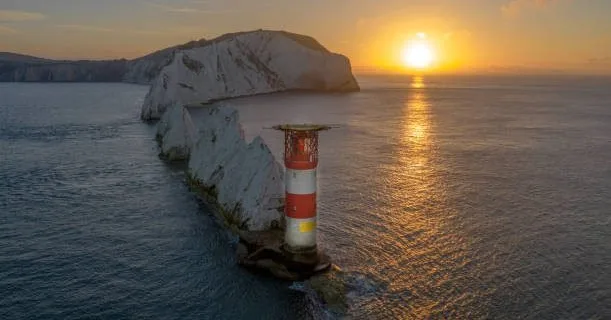
The passage to Yarmouth is one of our favourite day sails from Gosport. You head west along the north coast of the Isle of Wight, past the yacht clubs and beachfronts of Gurnard and Cowes Roads, before rounding Egypt Point and opening up the western Solent. The scenery changes as you go: the northern shore opens into the wide waters of the West Solent, with the Needles lighthouse becoming visible in the distance on a clear day.
The critical moment on this route is the transit of Hurst Narrows. This narrow channel between Hurst Castle Spit and the north coast of the Isle of Wight funnels the entire tidal flow of the West Solent through a gap barely half a mile wide. At springs the tide can reach 4 knots, and overfalls develop in stronger winds. The gate opens at approximately HW Portsmouth -2, when the ebb has eased enough for safe westbound passage. Arrive early and anchor in the lee of Hurst Castle to wait if needed. Time this wrong and you will make very little progress, or none at all.
Yarmouth itself is one of the prettiest ports on the Solent. The medieval harbour with its stone pier, the 16th-century castle, and the village green create a setting that feels distinctly unspoilt. The Town Quay offers visitors’ berths with power and water (book ahead in summer), and the anchorage off the harbour entrance is a popular spot for a quiet night. Ashore, the Salutary on the quayside does excellent seafood, and the Off The Rails bistro is well regarded. Yarmouth also has a good chandlery for essential supplies and repairs.
Route 3: Gosport to lymington
Distance: 16 nautical miles | Time: 3–3.5 hours | Best tide: Arrive HW -3 to HW -1 (to access the river)
Lymington is a favourite destination for our charter clients, and it is easy to see why. The approach runs west through the Solent past the entrance to the Beaulieu River, then a sharp turn to port into the Lymington River. The river dries at low water, so timing your arrival is critical. You need enough water to cross the bar and motor up the river to the marinas, aim for between HW -3 and HW -1 to have a comfortable depth all the way.
Watch out for the Wightlink ferry crossing between Lymington and Yarmouth. It runs frequently, especially in summer, and its wake can catch out an inattentive helm. The ferry has right of way when leaving port under the International Regulations for Preventing Collisions at Sea (IRPCS), so give it plenty of room and pass astern. We teach collision avoidance thoroughly on our RYA courses, and the Lymington ferry crossing is a perfect real-world example of why maintaining a good lookout matters.
Lymington has two main marinas: Lymington Yacht Haven and Berthon Marina. Both offer full facilities including showers, laundry, pump-out, and chandleries. The town itself is a charming New Forest market town with a Saturday market, excellent bakeries, and multiple pubs and restaurants. The walk from the marina to the high street takes less than ten minutes. For a longer stay, the New Forest National Park is on the doorstep and offers wonderful walking and cycling.
This route is a particular favourite for skippers wanting to practise tidal calculations. The combination of a drying river entrance, a constricted channel, and a busy ferry port makes it a proper navigation challenge. It is also a perfect destination for a weekend charter, sail over on Saturday, explore the town, and return to Gosport on Sunday with the tide.
Route 4: Gosport to Portsmouth harbour
Distance: 2 nautical miles | Time: 20–30 minutes | Best tide: Any, but time around naval movements
The shortest route on our list is also one of the most instructive. Crossing from Gosport to Portsmouth Harbour is a short hop, barely two miles, but it packs more navigation challenges per mile than any other passage in the Solent. You depart from Haslar Marina or Gosport pontoon, cross the main Portsmouth Harbour entrance channel, and arrive at Gunwharf Quays or Haslar Marina on the Gosport side.
The key consideration is commercial and naval traffic. Portsmouth Harbour is home to the Royal Navy’s surface fleet, including the Queen Elizabeth-class aircraft carriers, Type 45 destroyers, and frequent visits from NATO vessels. Portsmouth Port Control operates on VHF Channel 11, and you must call them before crossing the harbour entrance. They will advise you on traffic and may ask you to hold position while a large vessel transits. Do not cut across the bows of a naval vessel, they are faster than they look and have restricted manoeuvrability.
Inside the harbour, Haslar Marina on the Gosport side offers full visitor facilities and is the base for our fleet. On the Portsmouth side, Gunwharf Quays Marina puts you right next to the Gunwharf Quays outlet shopping centre, the Spinnaker Tower, and a huge range of restaurants and bars. The historic Portsmouth Dockyard, home to HMS Victory and the Mary Rose Museum, is a short walk from Gunwharf. This is an ideal short sail for a relaxed day out, or for skippers wanting to practise harbour approaches without committing to a longer passage.
Route 5: Gosport to chichester harbour
Distance: 12 nautical miles | Time: 2.5–3 hours | Best tide: Arrive HW -2 to HW
Chichester Harbour is an Area of Outstanding Natural Beauty and one of the most picturesque sailing destinations on the south coast. The route from Gosport takes you east past the entrance to Langstone Harbour, across the approaches to Thorney Island, and into the wide entrance of Chichester Harbour. The harbour covers over 12 square miles of mudflats, salt marshes, and deep-water channels at high water, it is a paradise for exploration, but it demands careful navigation.
The main hazard on this passage is Winner Bank, a shallow ridge that extends south-east from the entrance to Langstone Harbour. At low water it dries completely, and even at high water it can be uncomfortably shallow for a deep-keel yacht. The safe water lies to the south of Winner Bank, well clear of the shallows. Keep a good plot on the chart and check your depthsounder regularly. Once inside Chichester Harbour, the main channel is well buoyed but twists through the mudflats, do not cut corners.
The harbour has several excellent destinations. Itchenor is a classic sailing village with a sailing club, a shipyard, and a popular anchorage. Bosham (pronounced “Bozzum”) is an ancient Saxon village with a beautiful church and a tidal quay, you can dry out alongside the wall at low water. West Wittering offers a beachside pub and anchorage for settled weather. There are also visitor moorings at several locations managed by the Chichester Harbour Conservancy. For a longer stay, the historic city of Chichester is a few miles inland with its magnificent cathedral, Roman palace museum, and excellent shops and restaurants.
Chichester Harbour is especially rewarding for skippers who enjoy pilotage. The constantly shifting channels require attention to detail and a good understanding of drying heights and tidal curves. It is a skill we emphasise on all our courses, and one that pays dividends on any coastal passage.
Tidal planning: the key to all five routes
Every one of these routes depends on getting the tides right. The Solent’s double high water phenomenon, caused by the Isle of Wight splitting the tidal flow around both sides, means the tide behaves differently here than anywhere else in the UK. At Gosport, there are roughly two high waters about two hours apart, with a short period of slack water between them. The tidal diamonds on your chart are essential reading, and we recommend plotting your passage with tidal vectors before you go.
A good practice is to plan your departure so that you arrive at your destination on a rising tide. This gives you the deepest water for entering harbour and the most options if you need to dry out alongside. Carry paper charts as a backup to electronic navigation, battery failure or a lightning strike can knock out your electronics in seconds. The RYA provides detailed tidal resources through its training materials, and our instructors incorporate tidal exercises into every practical course we deliver.
Preparing your yacht for a Solent passage
Before setting out on any of these routes, a thorough pre-departure check is essential. Check the engine oil and coolant, verify that your safety equipment is in date and properly stowed, and brief your crew on their roles. The Solent can go from flat calm to F6 in under an hour, so have a reefing plan ready and make sure everyone knows where the lifejackets and harnesses are stowed. We cover all of this on our sailing courses, and it quickly becomes second nature with practice.
Our yacht charter clients receive a full handover and briefing before departure, including local knowledge on the routes above. If you would like to explore these passages under the guidance of an experienced instructor, consider booking one of our RYA courses or a skippered charter. There is no better way to build confidence in Solent sailing than doing it with someone who knows these waters inside out.


