
Portsmouth harbour pilotage. Three words that make some skippers nervous and others dismissive. I have seen both reactions while teaching on the Solent. The entrance looks straightforward from a distance. A gap in the harbour wall, a few buoys, some leading marks on the ancient ramparts. Easy. But Portsmouth harbour pilotage is one of those things that demands proper respect. The tides run hard across the entrance, commercial traffic moves constantly, and the deepwater channel is narrower than it looks on the chart. Good Portsmouth harbour pilotage means understanding the approach, reading the buoyage correctly, timing your arrival to match the tidal gate, and knowing exactly who to call on the VHF. This guide covers everything you need for safe Portsmouth harbour pilotage, whether you are a Day Skipper student preparing for your practical or a visiting cruiser arriving for the first time.
Approaching Portsmouth harbour

Any Portsmouth harbour pilotage starts before you leave the berth. You need to know your arrival time relative to high water, check the weather forecast, and study the relevant chart. Portsmouth Harbour is approached from the east through the Spithead or from the west via the Solent. Either way, the entrance itself lies between two prominent landmarks: the Round Tower on the eastern side and the Semaphore Tower on the western side.
The main approach from the east brings you past Horse Sand Fort and the deepwater channel marked by a series of safe water buoys. You stay south of the Outer Spit buoy (Fl(2)10s, north cardinal off Southsea) and then turn north toward the entrance. The chart shows a minimum depth of around 3.5 metres in the approach channel at LAT, but this reduces quickly on either side. Stick to the leading line of 300 degrees true, which lines up the Semaphore Tower with the centre of the harbour entrance, and you will have adequate water under the keel for any yacht drawing up to two metres.
From the west, you approach through the Solent between the Isle of Wight and the mainland. The transition from open Solent into the harbour approach requires careful pilotage because the tidal streams converge here. At springs, the east-going stream pushes you toward the entrance at up to 3 knots, while the west-going stream sets you away from it. I have seen yachts swept past the entrance because the crew did not account for the last half hour of the ebb. A good Portsmouth harbour pilotage plan factors in the tidal stream at the entrance, not just in the Solent.
The Solent is a challenging tidal area even on a calm day. Approaching Portsmouth Harbour from either direction demands that you understand how the tides interact with the geography. The deepwater channel buoys make it look simple, but the current does not read the buoys.
Navigating the harbour entrance
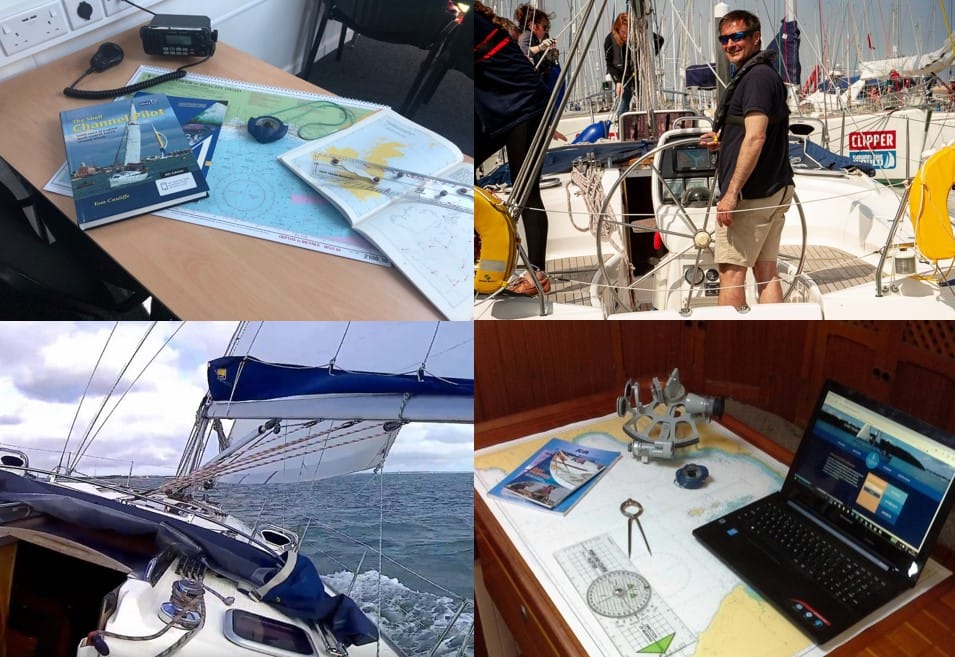
The critical moment in any Portsmouth harbour pilotage is the turn between the Round Tower and the Semaphore Tower. The entrance is about 140 metres wide at its narrowest point. That sounds plenty, but the deepwater channel is much tighter. The eastern side shelves gradually. The western side drops more steeply but has a wreck obstruction marked on the chart about 50 metres off the Semaphore Tower. Stay mid-channel and you will find consistent depths of 3.5 to 5 metres depending on the state of the tide.
The leading marks are your best friend here. Two prominent white triangles on the harbour wall behind the Round Tower, when kept in transit, guide you straight up the centreline. Line them up and hold them there. If you lose the transit, you are wandering out of the deepwater channel and that is when things get interesting in the wrong way. Power or sail, you should approach at slow speed. The harbour speed limit is 8 knots but sensible Portsmouth harbour pilotage means you are doing 4 knots or less through the entrance. Wash damages the moored boats inside and the harbour patrol take a dim view of excessive wake.
Once you pass between the towers, the harbour opens out ahead of you. The main channel splits. To port, the channel leads toward Gunwharf Quays and Port Solent via the lock. To starboard, the channel runs past the Royal Navy s shore establishments and down toward Haslar Marina and the Gosport side. Dead ahead, the harbour opens into the main anchorage area with depths of 6 to 10 metres in the centre. Your Portsmouth harbour pilotage plan should already tell you which way you are turning before you reach the entrance.
One thing I see regularly is visiting yachts dropping sails too late. Get your sails down and your engine on before you reach the Outer Spit buoy. The entrance is not the place to be fiddling with halyards while the tide pushes you sideways.
Understanding tidal gates and streams
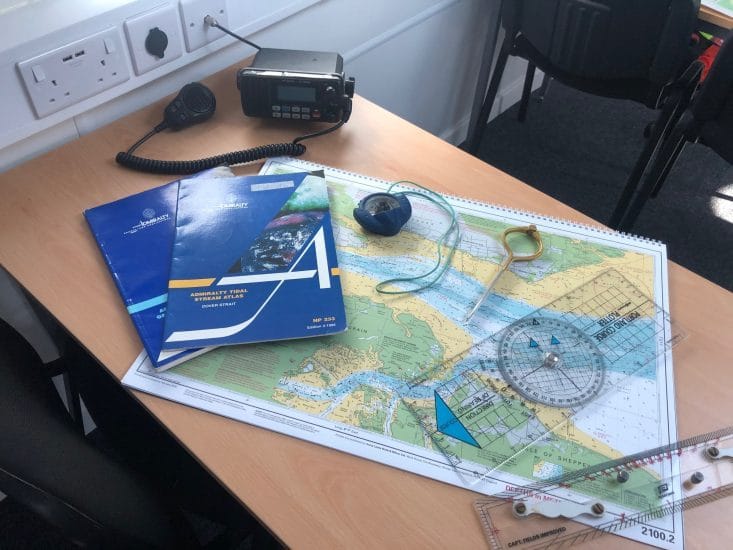
Tides dominate every aspect of harbour entry and exit. The harbour has a mean spring range of about 4.7 metres and a neap range of about 2.2 metres. The tidal gate for safe entry is roughly two hours either side of high water for most yachts. Entering at low water is possible if you know the channel and draw less than 1.5 metres, but I would not recommend it for a first visit. The narrowest part of the channel has only 1.8 metres at LAT on the eastern edge. One mistake and you are aground.
The tidal stream at the entrance runs parallel to the harbour wall, not straight in and out. This is the detail that catches people out. On the flood, the incoming tide sweeps across the entrance from east to west, pushing you toward the Semaphore Tower. On the ebb, the outgoing stream pushes you toward the Round Tower. Your Portsmouth harbour pilotage needs to account for this cross-set and steer a course that compensates for it, not just point the bow at the entrance and hope. I teach my students to pick a transit on the far side of the harbour and steer for that, checking the cross-set against the leading marks every few seconds.
Springs versus neaps makes a real difference to your Portsmouth harbour pilotage planning. At springs, the stream runs at over 3 knots across the entrance. That is fast enough to sweep a yacht doing 5 knots well off course in under a minute. At neaps, the stream drops to around 1.5 knots and is much easier to manage. If you have a choice about which week you visit, neaps give you a bigger margin for error.
The Portsmouth tide gauge is the standard reference for Solent tidal predictions. You can get real time data from the UK Hydrographic Office or via the Portsmouth Port website. Never rely on phone apps alone for Portsmouth harbour pilotage around springs. They use predicted data, not real time readings, and the difference matters when you only have 0.5 metres of clearance.
VHF channels and port control
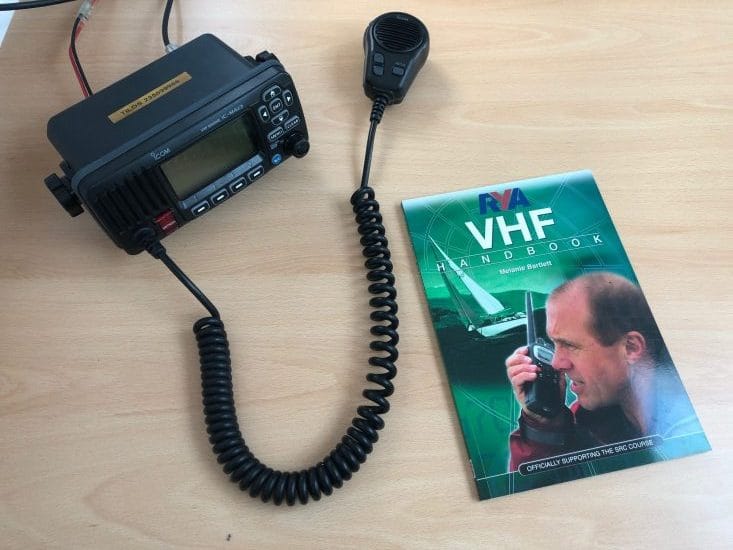
Portsmouth is a commercial port and the harbour master expects all vessels over a certain size to call in. For yachts under 20 metres, the requirement is advisory rather than mandatory, but the best practice is to call Portsmouth Port Control on VHF channel 11 as you approach the entrance. Say your vessel name, type, length, your position, and your intended destination inside the harbour. They will acknowledge and may give you a traffic advisory. Do not expect them to give you permission. Portsmouth Harbour is not a port where you request entry like in some commercial harbours. You announce your intentions and they tell you about traffic.
Beyond Port Control, other VHF channels you need for Portsmouth harbour pilotage include channel 14 for marina berthing instructions. Haslar Marina listens on 80. Gosport Marina (Premier) uses 80 as well. Gunwharf Quays uses 80 via the lock keeper. Port Solent uses channel 80 for the lock. The pattern is that most marinas in the harbour use VHF channel 80 for berthing, so keep that one programmed.
Channel 16 is the international distress and calling channel. You should monitor it while approaching, but do not make your Portsmouth harbour pilotage calls on 16. Call Port Control on 11, switch to 80 for marinas. Channel 12 also covers some commercial traffic movements inside the harbour, notably the Gosport ferry and the harbour tour boats.
I always tell my students to write their VHF calls down before they key the mic. Nerves make people forget their own boat name. A simple script for Portsmouth harbour pilotage on channel 11 goes like this: Portsmouth Port Control, this is sailing yacht Blue Moon, 12 metres, approaching from east, requesting to enter and proceed to Haslar Marina. Over. Short, clear, professional. Listen for the response before transmitting again.
Berthing options in Portsmouth harbour

The harbour provides several berthing options and your Portsmouth harbour pilotage plan should account for which one you are heading to. The main choices are Haslar Marina on the Gosport side, Premier Gosport Marina next to Haslar, Gunwharf Quays inside the harbour on the Portsmouth side, and Port Solent further north through the lock.
Haslar Marina is the most convenient for sailing schools and training providers in the area, including us at Commodore Yachting. It has deep water access at all states of the tide, good visitor berths, and direct access to the Solent. Your approach from the harbour entrance requires hugging the Gosport side after the Round Tower transit, then turning to starboard past the navy fuel jetty. Depths in the approach to Haslar are 4 to 6 metres. Good practice here means keeping clear of the Gosport ferry terminal, which has ferries moving constantly across the channel.
Gunwharf Quays sits on the Portsmouth side and requires turning to port after the entrance. The approach is straightforward but the visitor berths can be exposed to wash from the harbour traffic. The lock into Gunwharf basin is managed by VHF channel 80 and opens on request. Your Portsmouth harbour pilotage needs to include a call to the lock keeper about 10 minutes before you arrive so they can prepare.
Port Solent is further north, a 15 minute motor from the entrance through the main harbour channel. The lock is the constraint here. It opens roughly every two hours around high water, so your arrival time matters. Check the lock times as part of your Portsmouth harbour pilotage planning and do not assume you can get in at any time. Port Solent is a great destination with restaurants and shops inside the basin, but the lock restricts your tidal flexibility significantly.
Anchoring inside the harbour is possible in the area south of the main channel, east of the fuel jetty. Depths are 4 to 8 metres with reasonable holding in mud and sand. You need to stay clear of the main shipping channel and the Gosport ferry route. Anchoring is free but you must not obstruct commercial traffic.
Safety considerations and hazards
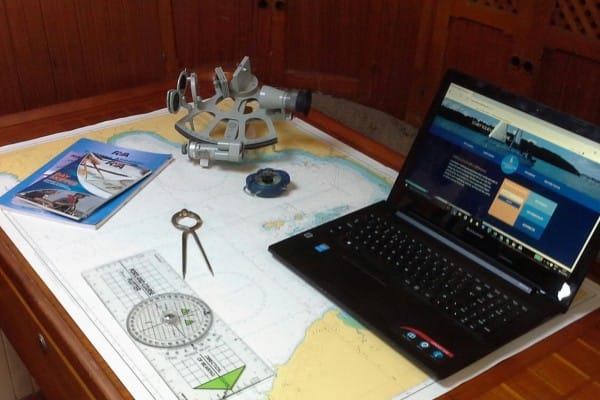
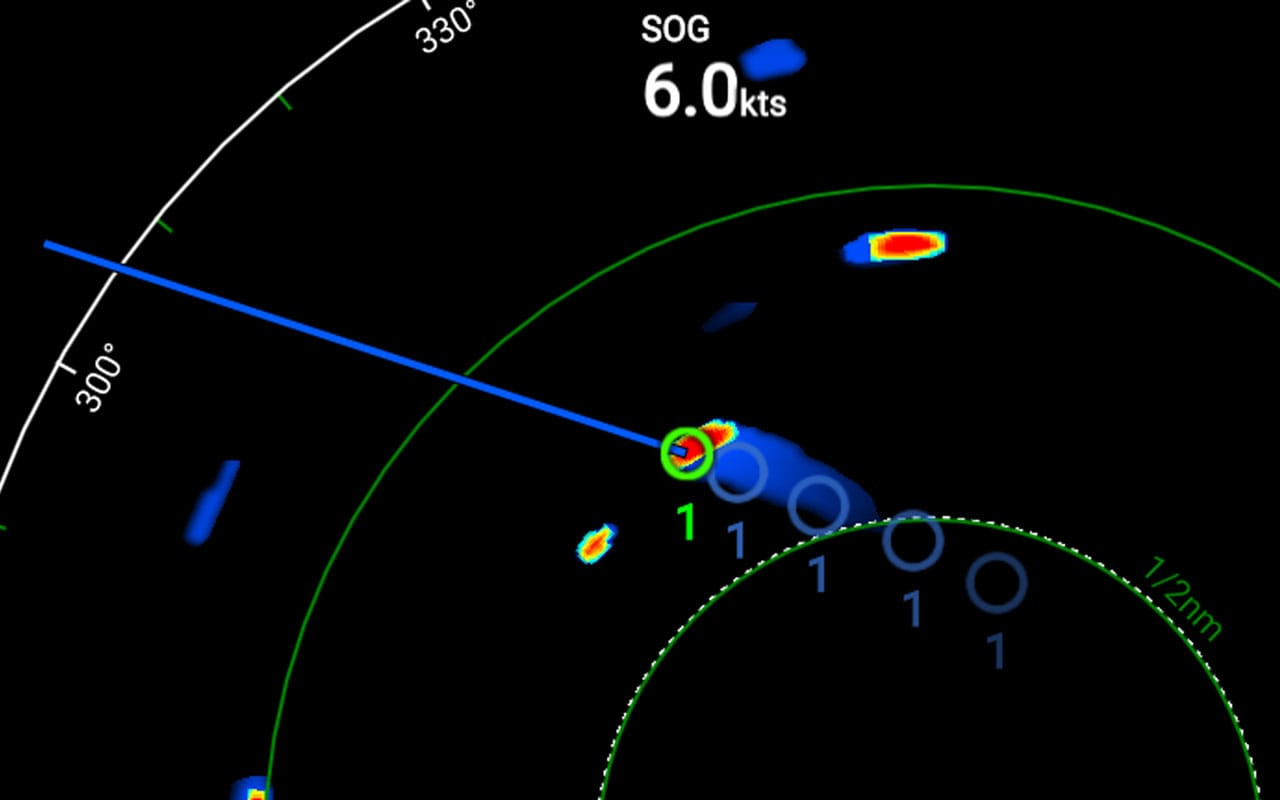
Portsmouth harbour pilotage comes with specific hazards that you do not find in many other harbours. The most significant is commercial shipping. Portsmouth is a major naval base and ferry port. Huge vessels move through the entrance and the main channel with limited manoeuvrability. A cross channel ferry at 15 knots takes about two minutes from Spithead to the entrance. If you are in the way, the ferry cannot stop. Your Portsmouth harbour pilotage must include keeping a sharp lookout astern as well as ahead, especially when you are approaching the entrance.
The second hazard is the shallow water on the eastern edge of the channel. The area known as Southsea Beach extends a long way out. At low water springs, the depth drops to less than 0.5 metres outside the buoyed channel. I have pulled a yacht off that bank that went aground because the skipper cut the corner coming in from the east. The Portsmouth harbour pilotage rule is simple: do not cut corners. Stay inside the deepwater channel markers.
Other hazards include the Gosport ferry crossing your path near the entrance of Haslar Marina, pleasure craft that do not follow the rules, and the occasional military exercise in the harbour. The Portsmouth Harbour byelaws govern all vessel movements. Read them before you visit. They cover speed limits, right of way, and restrictions on anchoring near naval installations. The full byelaws are published on GOV.UK and worth a read as part of your Portsmouth harbour pilotage preparation.
Visibility can drop quickly in the Solent. Sea fog forms without warning, especially in spring and early summer. If you are not confident navigating by radar or GPS alone in restricted visibility, wait for it to clear. Pushing on with poor visibility in a busy harbour entrance is how mistakes happen.
Pilotage tips from RYA instructors
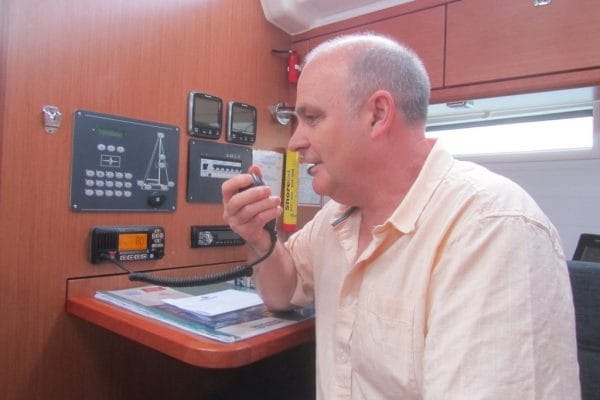
Tom and I have taught Portsmouth harbour pilotage to hundreds of RYA students over the years. These are the tips that come up most often.
First, do a dry run before you arrive. Look at the harbour on Google Earth or study the chart as part of your Day Skipper theory. Identify the Round Tower, the Semaphore Tower, the leading marks, the buoys. Walk the route on the chart until you can picture the entrance before you see it. Good Portsmouth harbour pilotage is mostly about knowing what to expect.
Second, brief your crew before the approach. Tell them where you are going, what you need them to do, and what to look out for. A crew that knows the plan makes the approach smoother. A crew that does not creates confusion at exactly the wrong moment. Delegate someone to watch for ferries and another to monitor the depth sounder.
Third, the RYA syllabus covers pilotage as a core competency for a reason. Use all your navigation tools together. The chartplotter is excellent but it has a lag. The depths shown are from the chart, not real time. Your eyes on the leading marks are always more reliable than the electronic position for pilotage. I tell students to use the plotter for situational awareness and their eyeballs for precision. This is where your RYA Day Skipper practical training pays off.
Fourth, do not rush. The entrance looks intimidating with traffic coming and going, but you are better off slowing down or even holding off outside the harbour for 10 minutes than charging in with a poorly prepared approach. Give way to commercial traffic. They cannot give way to you. If in doubt, circle outside the Outer Spit buoy, compose yourself, and call Port Control for advice. There is no shame in a slow, careful approach.
Fifth, practice your close quarters handling in a less pressured environment first. Before you attempt the entrance with a 12 metre Bavaria, practise berthing in a quiet marina. Know how your boat handles at slow speed, how much rudder it needs, how it responds to prop walk. These skills transfer directly to the harbour entrance.
We cover all of this and more on our RYA sailing courses, where students get real world Portsmouth harbour pilotage experience under instructor supervision. There is no substitute for doing it with someone who knows the harbour telling you what to look for.
Frequently asked questions
Do I need to call Port Control before entering Portsmouth Harbour?
For yachts under 20 metres, calling is advisory but strongly recommended. Call VHF channel 11 with your vessel name, type, length, and intended berth. It is good practice and gives you traffic awareness.
What is the best tide for Portsmouth harbour pilotage?
Two hours either side of high water gives the deepest water and the most manageable tidal streams. Neap tides are easier than springs for first time visits. Entering at low water is possible for shallow draft vessels but is not recommended without local knowledge.
How deep is the entrance channel?
The main channel has depths of 3.5 to 5 metres at LAT. The edges shelve quickly. Stay mid channel on the leading line for maximum depth.
Which VHF channel for Portsmouth marinas?
Port Control uses channel 11. Most marinas (Haslar, Premier Gosport, Gunwharf, Port Solent) use channel 80 for berthing instructions. Monitor channel 16 for safety.
Can I anchor inside Portsmouth Harbour?
Yes, in the southern part of the harbour clear of the main channel and the Gosport ferry route. Depths are 4 to 8 metres with reasonable holding. Do not obstruct commercial traffic.
What are the main hazards entering Portsmouth Harbour?
Commercial shipping, especially ferries and naval vessels, plus shallow water on the eastern side of the channel outside the buoyed route. Cross tidal streams at the entrance require active correction. Fog can reduce visibility to near zero in minutes.
This guide was written by Tom and Jonno, RYA Yachtmaster Instructors and joint owners of Commodore Yachting. We teach Portsmouth harbour pilotage as part of all our practical RYA courses on the Solent, giving students real experience navigating one of the UK s busiest harbour entrances under qualified instruction. For structured training that covers pilotage, passage planning, and tidal navigation, see our RYA Day Skipper practical course or start with the online Day Skipper theory to build your navigation knowledge before you get on the water.


