
Want to pass RYA practical exam first time? You are not alone in asking. Every week at Commodore Yachting, we meet students who are nervous about their upcoming exam. Some have been sailing for years. Others are finishing their first season. All of them want to pass RYA practical exam first time and avoid the cost and disappointment of a retake.
The good news is that most students CAN pass RYA practical exam first time with the right preparation. Tom and I have instructed hundreds of students through RYA practical exams at every level, from Day Skipper to Yachtmaster. We have seen what works and what does not. This guide breaks down the strategies you need to pass RYA practical exam first time, whether you are taking your Day Skipper, Coastal Skipper, or Yachtmaster exam.
Understanding the RYA practical exam format
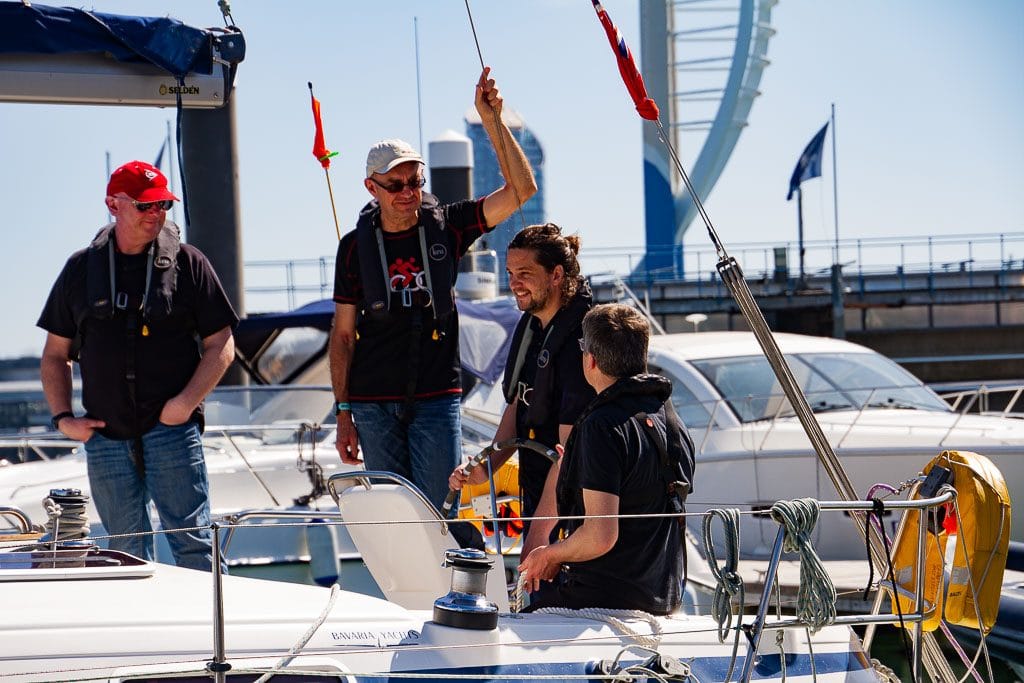
The RYA practical exam is not a pass or fail test in the school sense. Your examiner assesses you against a published set of competencies specific to your course level. To pass RYA practical exam first time, you need to understand exactly what those competencies are before you step on board.
For Day Skipper, the exam runs over 5 days with your instructor assessing continuously. You are expected to skipper the yacht on passages up to 20 miles, berth alongside, pick up a mooring buoy, and demonstrate competence in navigation, collision regulations, and crew management. The instructor decides whether you meet the standard by the end of the week. There is no separate exam day — your entire course is the assessment.
Coastal Skipper and Yachtmaster exams are different. These are standalone assessments with an independent RYA examiner who joins the boat for 6-12 hours. The examiner watches you skipper, tests your navigation, and asks questions on theory. To succeed at these levels, you need to demonstrate consistent competence under scrutiny from someone you have never met before.
This distinction matters. The answer to how to prepare depends on which level you are aiming for. A Day Skipper student who performs well across 5 days will usually pass. A Yachtmaster candidate who has one bad hour during a 10-hour exam might fail. The margin for error shrinks as you climb the ladder.
Before the exam: essential preparation

Preparation is the single biggest factor in whether you pass RYA practical exam first time. Most people who fail do not fail because they lack skill. They fail because they did not prepare properly. Here is what you need to sort out before your course starts.
Complete your theory first
Every student should finish their theory course before the practical exam. For Day Skipper, that means completing the online RYA Day Skipper theory course. For Yachtmaster, you need the Yachtmaster theory certificate. Theory is not just a box to tick. If you arrive without solid theory knowledge, you will waste your practical week catching up on chart work instead of practicing boat handling. Students who complete theory first are far more likely to pass RYA practical exam first time.
Log your sea time properly
The RYA requires minimum sea time before each exam level. Day Skipper needs 5 days, 100 miles, and 4 night hours. Yachtmaster Coastal needs 30 days, 800 miles, and 12 night hours. Yachtmaster Ocean needs 2500 miles including a qualifying passage. These are minimums, not recommendations. We advise students to double the minimum before attempting their exam. The more time you have spent making decisions on the water, the better your chances on exam day.
Do a prep course or skills weekend
If you have not sailed for a few months before your exam, your skills will be rusty. We run dedicated prep courses and the RYA Day Skipper practical skills weekend that focus specifically on exam techniques. These are not a substitute for logged sea time, but they help you identify weak areas before the real assessment. Students who do a prep course are noticeably more relaxed on exam day, which boosts their confidence and performance.
Know your boat
Every boat handles differently. If you are training with us at Commodore Yachting, you will sail on our Bavaria fleet from Gosport Marina. Learn the specific handling characteristics of your boat before exam day. Practice the engine controls. Learn where every safety item lives. Knowing your boat well enough that you do not have to think about basic operations frees up mental capacity for the complex stuff, and that gives you the edge on the day.
Essential skills you must master

Some skills carry more weight in the exam than others. Based on years of seeing exactly where students struggle, here are the ones that matter most if you want to pass RYA practical exam first time.
Boat handling under power
Your ability to control the boat in a marina is the most visible skill you will demonstrate. Examiners watch your use of throttle, rudder, and gearbox. A student who can turn a 38-foot Bavaria in its own length using prop walk has made a strong start. Practice berthing port side to, starboard side to, and stern to in various wind and tide conditions. This alone can make or break your exam result.
Man overboard recovery
The RYA takes MOB drills seriously, and for good reason. You need to demonstrate a controlled figure-of-eight or Q flag approach under sail and power. The key is consistency. Set up the same way every time. Your examiner will judge how quickly you react, how clear your commands are, and whether you maintain visual contact with the casualty. A smooth MOB drill is one of the strongest signals that you are ready for certification.
Navigation and passage planning
Examiners want to see that you can plan a passage safely and adjust when things change. This means plotting courses, accounting for tide and leeway, calculating ETAs, and identifying hazards before they become problems. For Yachtmaster candidates, the examiner will give you a short notice passage plan and watch you execute it under time pressure. Students who can think ahead on navigation are far more likely to succeed on exam day.
Collision regulations
You need to know the ColRegs, not just remember them. The examiner will watch how you apply them in real situations. Are you identifying the give-way vessel correctly? Are you taking early and substantial action? Are you using the right sound signals? A student who can recite rule 12 but then holds course when they should give way has not convinced anyone. Understanding ColRegs instinctively is essential to passing any RYA practical exam.
Heavy weather sailing
Conditions in the Solent can change fast. We have seen flat calm turn into 25 knots in under an hour. You need to know when to reef, how to heave to, and what to do in a gust. The examiner wants to see that you read the conditions and act before things get difficult. Reactive sailors struggle. Proactive sailors pass RYA practical exam first time.
Common mistakes that fail students
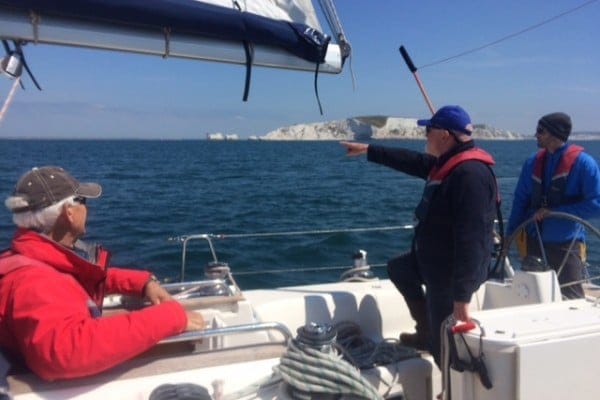
I have watched hundreds of exam attempts over the years. These are the most common reasons students do not pass RYA practical exam first time.
Poor command of the crew
Many students treat the exam crew like friends rather than a team they need to direct. You must give clear, timely instructions. Do not assume people know what you want. Say “Prepare to come alongside, fenders on starboard side, starboard quarter spring first.” Do not say “Can you maybe get the fenders ready?” indecisive commands create confusion, and examiners notice. This is the number one reason people fail their exam.
Forgetting the basics
Lifejackets. Kill cord. Engine checks. Sound signals. These are simple things that students forget under pressure. We had a Yachtmaster candidate once who completed a perfect passage, perfect berthing, perfect MOB drill, and then failed because he did not do a single engine room check all day. The basics matter. Do them every time, even when you are nervous. That consistency is what earns you a pass.
Navigation errors under pressure
When the wind picks up and the examiner is watching, students stop doing their paperwork. They stop taking fixes. They stop updating the passage plan. This is a guaranteed way to fail. The examiner needs to see that you can maintain your navigational routine regardless of what is happening on deck. If you stop navigating, you have stopped being the skipper. Do not let this happen if you want to come through on the day.
Not knowing your safety equipment
Every RYA student should know the location and operation of every safety item on board. Where is the fire extinguisher? How do you deploy the liferaft? What is the EPIRB registration number? The examiner will ask. If you hesitate or get it wrong, it signals that you are not ready for command responsibility. Knowing your safety gear cold is part of how you pass any RYA exam.
What RYA examiners look for
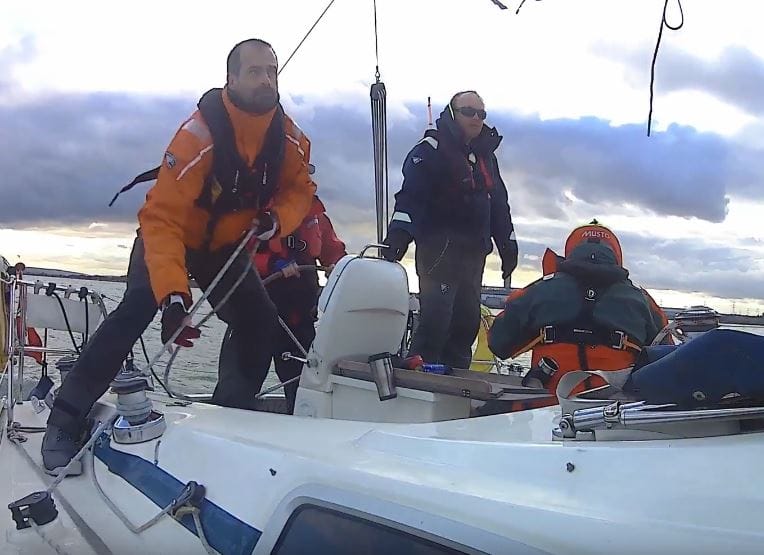
Understanding the examiner’s mindset helps you pass RYA practical exam first time. We have worked alongside dozens of RYA examiners over the years. Here is what they actually care about.
Consistency over flashiness. Examiners do not care if you are the fastest sailor on the Solent. They care if you can repeat the same safe procedures every time. A student who does a steady, unremarkable passage with good decision making is more likely to pass RYA practical exam first time than someone who pulls off impressive manoeuvres but skips the safety checks.
Command presence. The examiner wants to see that you are in charge. This does not mean being loud or bossy. It means being decisive, communicating clearly, and taking responsibility. If something goes wrong, own it and fix it. Do not blame the crew or the conditions. Examiners pass people who take responsibility.
Safety awareness. Safety is threaded through every part of the exam. The examiner watches whether you do a head count before leaving a waypoint. Whether you check the bilge before starting the engine. Whether you look around before altering course. These small actions add up. If you consistently demonstrate safety awareness, you are very close to being able to pass RYA practical exam first time.
Attitude. A candidate who is cocky gets the same result as one who is paralysed with nerves. Examiners look for someone who is confident but humble, willing to take advice, and able to learn from mistakes during the assessment. A positive, coachable attitude makes a real difference when the examiner makes their decision.
Managing exam day nerves
Nerves are the biggest barrier to performance. Even experienced sailors get nervous before an RYA exam. The difference is how they manage it. Here are techniques that help students pass RYA practical exam first time despite the anxiety.
Arrive early. Get to Gosport Marina at least 30 minutes before your start time. Walk the pontoons. Breathe the sea air. Check the weather. The last thing you want is to arrive stressed and rushed. A calm start gives you the best shot at a good result.
Stick to your routine. Your pre-exam checks should be the same as every other sail. Do not change your process because the examiner is watching. If you normally check the engine and sails before departure, do exactly that. Routine is comforting and it signals competence to the examiner.
Talk through your actions. Examiners cannot read your mind. If you are about to make a decision, say it aloud. “I am going to tack now because we are approaching the shallow patch.” This shows the examiner that you are thinking ahead. Students who narrate their decision making are far more likely to pass RYA practical exam first time because the examiner can see the competence that might otherwise be invisible.
Breathe. When you feel the panic rising, take three slow breaths before doing anything else. This sounds simple, but it works. The Solent will still be there in 30 seconds. Do not let a moment of panic undo weeks of preparation. A calm skipper is a safe skipper, and a safe skipper will pass RYA practical exam first time.
What happens if you do not pass first time?
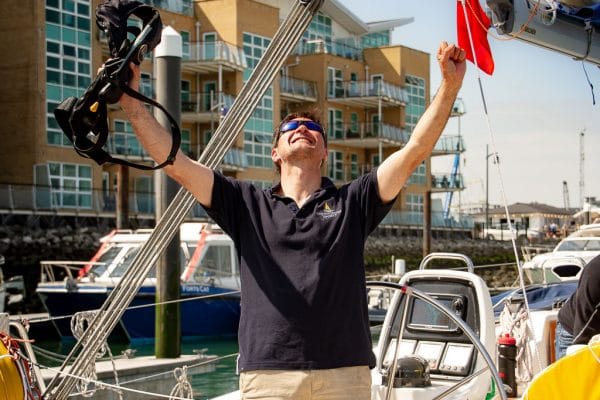
Let us be honest. Not everyone will pass RYA practical exam first time. The RYA pass rate varies by level, but roughly 70-80% of candidates pass at the first attempt. If you are in the 20-30% who do not, here is what happens.
Your examiner will give you a detailed debrief explaining exactly where you fell short. You will receive a form listing the areas that need improvement. You can retake the exam once you have addressed those weaknesses. There is no shame in this. Some of the best skippers I know failed their first Yachtmaster exam. One of our instructors failed his Coastal Skipper the first time. He went away, practiced his weak areas for three months, came back, and passed easily.
The cost of a retake depends on the level. Day Skipper students usually need to repeat some training days at a reduced rate. Yachtmaster candidates pay for another exam day with an RYA examiner. It is not cheap, which is one more reason to put the preparation in upfront and get it right the first time.
If you do need a retake, treat it as feedback, not failure. The examiner has given you a precise list of what to work on. Focus on those specific areas. Book a prep session. Practice with a friend. When you are ready, try again. Most people who retake pass on their second attempt because they know exactly what is coming.
Frequently asked questions

How long does the RYA practical exam take?
Day Skipper is assessed continuously over 5 days. Coastal Skipper and Yachtmaster exams are standalone sessions lasting 6-12 hours depending on conditions and the examiner’s assessment of your competence.
Can i fail the RYA practical exam on the first day?
For Day Skipper, it is unusual to fail on day one because the assessment is ongoing. But if you make a serious safety error on any day, the instructor can stop the course. For Coastal Skipper and Yachtmaster, the examiner can terminate the assessment early if they see a critical safety failing. That is why knowing your safety equipment and procedures is essential to pass RYA practical exam first time.
Do i need to have my own boat for the exam?
No. We provide our Bavaria yachts for all training and exams at Commodore Yachting. You just need to bring yourself, your logbook, and appropriate clothing. You can also use your own boat if it meets RYA requirements, but most students prefer to train and test on the same boat.
What happens if the weather is too bad for the exam?
The examiner decides. The Solent is sheltered enough that exams rarely need cancelling. In extreme conditions, the examiner may postpone or move to a more protected area. We have only cancelled one exam in the last three years due to weather. The UK sailing season runs April to October, so most students find good conditions that set them up for success.
Is the RYA practical exam harder than the theory?
They test different things. Theory is about knowledge. The practical exam is about application and judgment under pressure. Most students find the practical harder because it puts you in real situations with real consequences. That is exactly why you should do your theory first and supplement it with courses like our sailing courses to build practical confidence.
How many times can i retake the exam?
There is no limit. Each retake requires a new exam fee and you must demonstrate improvement in the areas identified by the previous examiner. The RYA does not publish a maximum number of attempts. We have seen students pass on their fourth try, and they went on to become excellent skippers.
What is the pass mark for RYA practical exams?
There is no percentage score. The examiner makes a professional judgement on whether you meet the published standard for each competency. You need to demonstrate competence in ALL areas to pass. Failing any single critical competency means you do not pass, regardless of how well you did on everything else.
Can i appeal if i disagree with the result?
Yes, the RYA has an appeals process. In practice, appeals are rare and rarely succeed. The debrief from your examiner is usually accurate. If you disagree, speak to your training school first. We can help clarify the feedback and advise on next steps.
This guide was written by Tom and Jonno, RYA Yachtmaster Instructors and joint owners of Commodore Yachting.


