
Why Portsmouth is known as the sailing capital
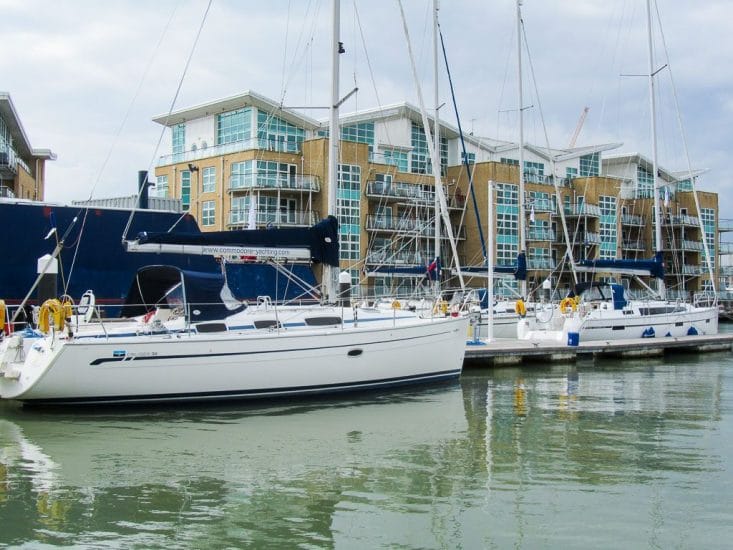
Portsmouth has a legitimate claim to the title. The city sits at the centre of the Solent, one of the busiest and best sailing waters in Europe, and its maritime history runs deeper than anywhere else on the south coast. For RYA students, the Portsmouth sailing capital UK reputation matters because it means the water you train on pushes you harder than most. Tidal variety. Busy shipping lanes. Real anchoring decisions. You get all of it within fifteen minutes of leaving the marina.
The geography is the main reason the Portsmouth sailing capital UK label sticks. The harbour is a large natural basin with deep water channels that have been used by ships for centuries. The Solent outside gives you everything from sheltered creeks to exposed open water. You cannot get that range in a landlocked estuary or a purpose built lake. The Portsmouth sailing capital UK training grounds are what they are because the physical environment demands competence. You learn faster when the water does not let you cut corners.
Walk along the Camber in Old Portsmouth on any weekend and you see why the Portsmouth sailing capital UK claim holds weight. Racing dinghies, cruising yachts, fishing boats, and the occasional warship all share the same water. The harbour is alive with maritime activity. That density of boats means instructors based here deal with real traffic management every day. It is not something you read in a textbook. It is something you do.
The city government and local businesses lean into the sailing identity. The Portsmouth sailing capital UK brand is visible on signage, tourism materials, and event marketing. But it is not just marketing. The concentration of sailing clubs, training centres, chandleries, and boatyards in one small area is unmatched. Southampton has the shipping. Cowes has the racing. Portsmouth has the full package for a student who wants to learn properly.
Other places make similar claims. But the Portsmouth sailing capital UK combination of geography, infrastructure, and training density gives it an edge for RYA courses specifically. You are not just learning to sail. You are learning on the water where professional skippers train. That difference shows in the quality of the sailors who come out of the local schools. Choosing a Portsmouth sailing capital UK school means you start your sailing career with real experience, not just theory.
Access to the Solent
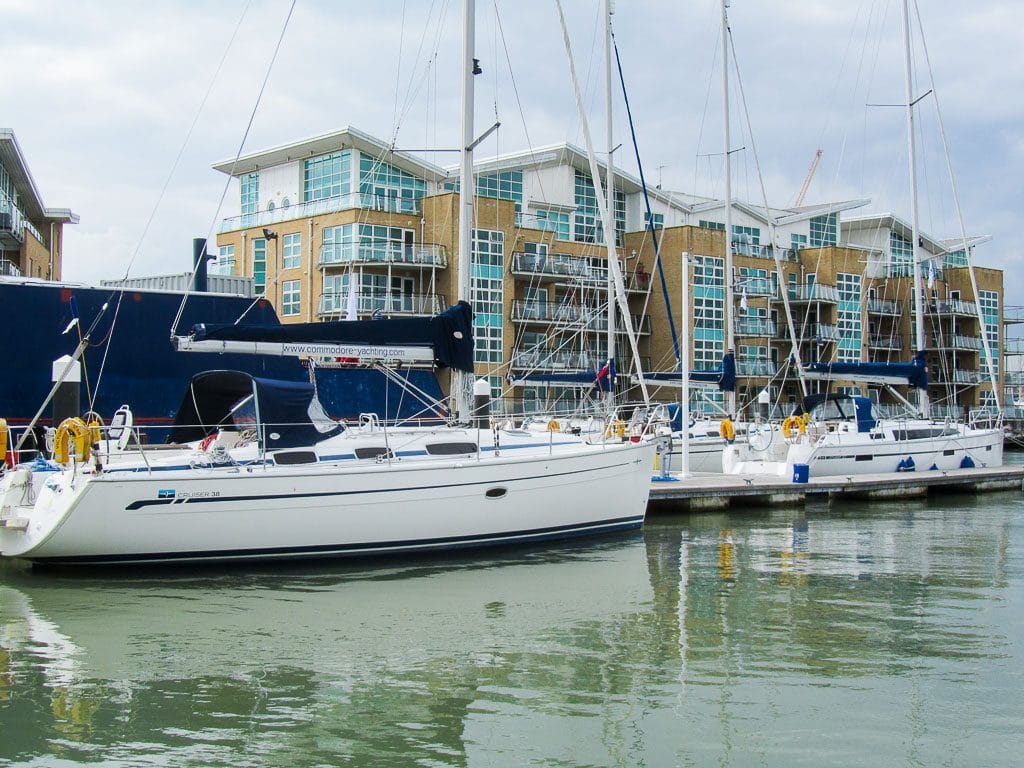
The Solent is the reason Portsmouth exists as a sailing centre. The stretch of water between the Hampshire coast and the Isle of Wight is one of the most varied sailing areas in northern Europe. For RYA students, access to the Solent is the single biggest advantage of training in Portsmouth. You leave the berth and you are in open water within minutes, with wind and tide ready to teach you something.
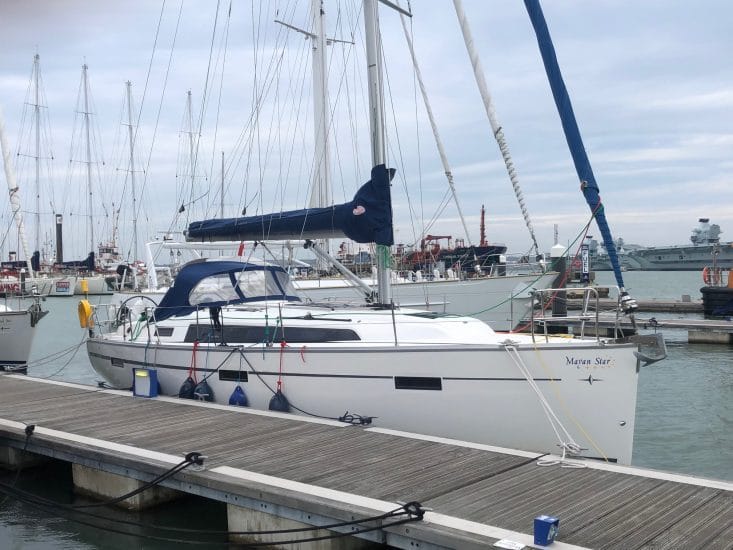
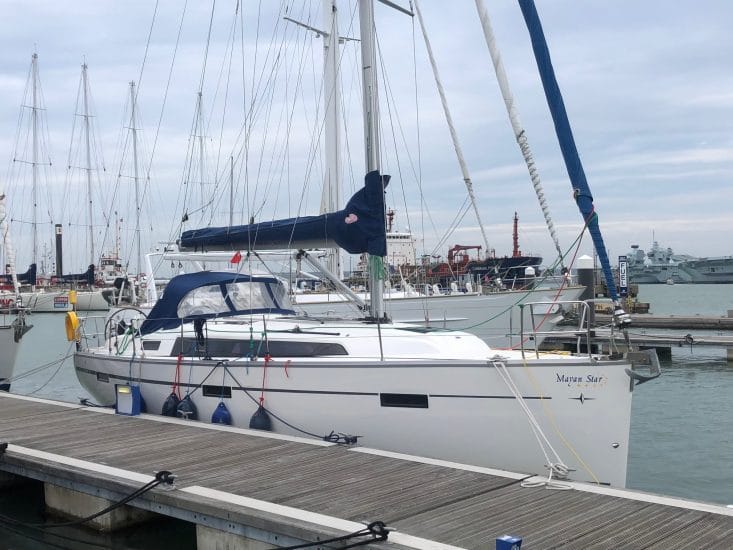
From Gosport Marina, where Commodore Yachting is based, you have direct access to the Solent without locks or tidal restrictions. Portsmouth Harbour itself is a large natural harbour. Gunwharf Quays Marina sits right at the harbour entrance. Haslar Marina in Gosport offers the same quick exit. Each one gives you immediate access to the waters that define the Portsmouth sailing capital UK experience.
Tidal range in the Solent is significant. Springs run at 4 to 5 knots through the main channels. The double high water phenomenon gives you extended flood tides. For Day Skipper and Coastal Skipper students, that means you plan passages with real constraints. You learn to work with the tide, not against it. That skill transfers directly to skippering your own yacht anywhere in the world.
The Portsmouth sailing capital UK waters offer a variety of destinations within a single day sail. West to the Needles and Alum Bay. Across to Cowes for a lunch stop. East to Chichester Harbour. Up the Beaulieu River. In a five day course you cover multiple harbour entries, different seabed types for anchoring, and a full range of traffic densities. No two days look the same. That is the real value of training in this area.
The shipping lanes south of the Isle of Wight keep large commercial vessels clear of the main sailing areas, but the approaches to Southampton Water and the Nab Tower still carry significant traffic. Learning collision avoidance in these conditions builds habits that last.
World class sailing facilities
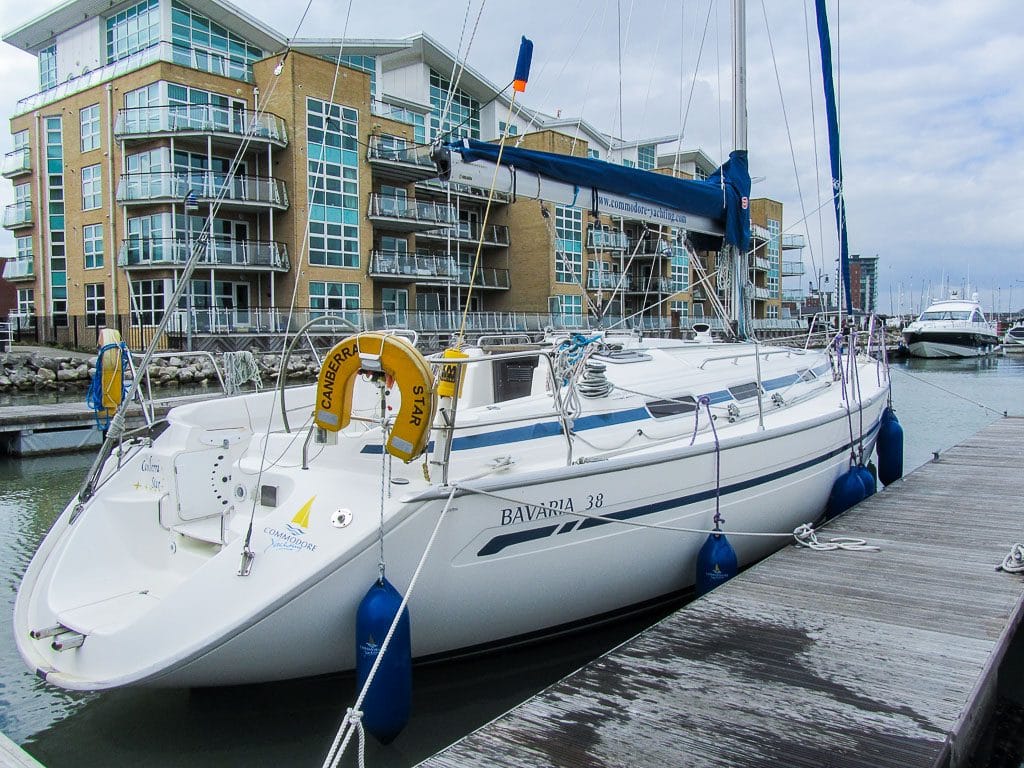
The infrastructure in Portsmouth backs up the claims. The concentration of facilities in a small radius is what makes the Portsmouth sailing capital UK reputation hard to argue with. You have boatyards, riggers, electronics specialists, and chart suppliers all within walking distance of the main marinas.
Gosport Marina has 350 berths with deep water access at all states of tide. The facilities include showers, laundry, a chandlery, and a cafe. Parking is available for students arriving by car. For a training base anchored in the Portsmouth sailing capital UK scene, it works because you do not waste time on logistics.
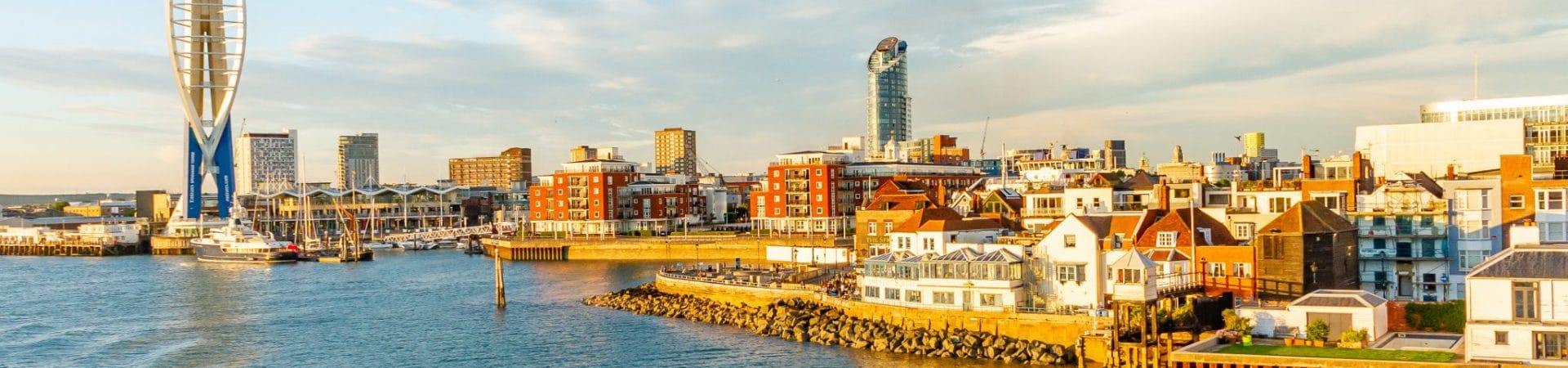
Gunwharf Quays Marina is a short walk from Portsmouth Harbour station and sits right next to the Spinnaker Tower. It is visitor focused with good facilities. The shopping centre has restaurants, a cinema, and a supermarket. Students staying nearby can walk to the marina. Haslar Marina across the harbour offers similar standards with a quieter atmosphere.
Boat maintenance services are available at several yards. The rigging loft at Gosport Marina handles repairs. Engine specialists cover Volvo, Yanmar, and Beta engines. The chandleries stock everything from safety equipment to navigation electronics. Having these services nearby keeps training yachts well maintained and any issues get resolved fast.
The clubs based in and around Portsmouth add to the sailing culture. The Royal Naval Sailing Association, the Royal Albert Yacht Club, and the Portsmouth Sailing Club all operate from the harbour. Their racing programmes and social events create a community that extends beyond training. Students who complete courses often join one of these clubs to keep sailing. That is another reason the Portsmouth sailing capital UK environment works for long term development as a sailor.
Maritime heritage and attractions
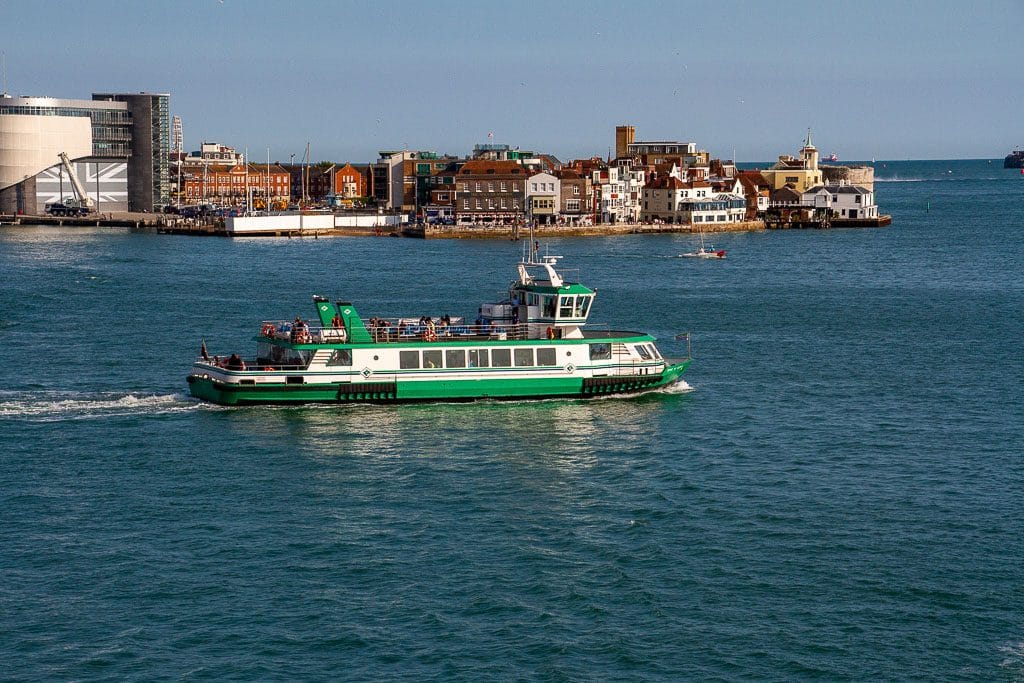
Portsmouth has more maritime history packed into a small area than most countries. The Historic Dockyard is the obvious example. HMS Victory, the Mary Rose, and HMS Warrior sit within a few hundred metres of each other. For sailing students, the dockyard is a reminder that the water you train on has been used by seafarers for centuries. Navigation marks, channels, and anchorages often trace back to naval use. Understanding that context makes reading the harbour easier.
The harbour entrance is guarded by the Round Tower and the Point Battery, built in the 15th century. Spitbank Fort, one of the Palmerston Forts from the 1860s, sits in the middle of the harbour entrance. Southsea Castle, built by Henry VIII, overlooks the eastern approach. These are not just tourist attractions. They are perfect day marks. Learn them once and you never forget them.
The Spinnaker Tower at Gunwharf Quays is the modern landmark. At 170 metres it is visible from most of the Solent and makes an excellent reference point when navigating. It appears on modern charts and chart plotters as a prominent feature.
All of this context adds depth to a training week. When you navigate the same channels that every navy and trading fleet has used for five hundred years, the Portsmouth sailing capital UK label starts to feel earned. It is not a slogan. It is an observation about a place that has been doing this longer than anywhere else.
Training opportunities in Portsmouth
Every major RYA practical course runs from Portsmouth. The range of training on offer reflects the variety of the waters. You can do Competent Crew, Day Skipper, Coastal Skipper, and Yachtmaster preparation from the same base. The Portsmouth sailing capital UK waters support progression at every level.
For beginners, Competent Crew gives you five days aboard a yacht learning the basics of sailing, safety, and seamanship. The Solent is ideal because you get manageable conditions close to port, with the option to push into more exposed water as confidence grows. Our sailing courses are structured around the tidal windows and local conditions, so every day on the water has a clear plan.
Day Skipper is the most popular course. It takes your existing experience and builds the skills needed to skipper a yacht on short daylight passages. The Portsmouth sailing capital UK training grounds are especially suited to this because you face real decisions. Where to anchor. When to leave. How to read the weather. Our RYA Day Skipper practical skills weekend covers this in a concentrated format that fits around work schedules.
Coastal Skipper pushes further. You plan longer passages, night sailing, and more complex pilotage. The Solent provides the tidal currents and traffic separation schemes that make this genuinely challenging. The Portsmouth sailing capital UK waters demand real competence, which is exactly what you want from an advanced course. You cannot fake it here.
Yachtmaster preparation and exam candidates come to Portsmouth because the exam routes test thoroughly. The Solent exam area covers Hurst Narrows, the Needles Channel, St Catherine’s Deep, and several harbour approaches. The variety within a single exam means candidates are tested on coastal navigation, boat handling, and seamanship all within a few hours.
Powerboat courses, first aid at sea, and short range certificates are also available locally. The Portsmouth sailing capital UK area has training providers for every type of course. We focus on sail, but the ecosystem is complete. Whatever level you are aiming for, the Portsmouth sailing capital UK training infrastructure supports it.
Living and studying in Portsmouth

A training week in Portsmouth is straightforward. The city is set up for visitors. The accommodation options cover every budget, the food scene has improved, and everything is within a short walk or bus ride from the marinas.
Accommodation near the waterfront is available at several price points. The George Hotel in Old Portsmouth is a favourite for its location and pub atmosphere. The Ship Leopard at Gunwharf Quays is modern and central. The Keppel’s Head Hotel overlooks the harbour. For budget options, the Ibis and Premier Inn at Gunwharf are reliable. Short term lets are common in Old Portsmouth and Southsea.
Food in Portsmouth is better than it used to be. Gunwharf Quays has the chain restaurants. Old Portsmouth has independent pubs and seafood spots. The Still and West at the harbour entrance has good food and a view of the Solent. Southsea has a growing restaurant scene. Lebanese, Thai, British. For a training week, having decent food at reasonable prices improves the overall experience.
What matters most for students is getting to the boat each morning. Commodore Yachting operates from Gosport Marina, a ten minute taxi or water bus ride from Portsmouth Harbour station. The water taxi runs across the harbour and drops you at Gosport pontoon, a two minute walk from the boats. That simplicity makes a difference when you are starting a five day course.
Evening trips to the pub with your course mates are part of the learning. Discussing the day’s pilotage or the near miss with a ferry reinforces what you learned on the water. Portsmouth has enough going on that you do not feel stuck in a hotel, but it is not so big that you lose focus on the course. That balance is harder to find than you might expect.
The marine community is another advantage of the Portsmouth sailing capital UK location for studying. Every evening the waterfront has sailors coming off the water, comparing notes, talking about conditions. You absorb that atmosphere even when you are not on the boat. It reinforces the training in a way that a classroom in a non coastal town cannot replicate.
How to get here and where to stay
Portsmouth is one of the most accessible sailing centres in the UK. Portsmouth Harbour station is on the direct line from London Waterloo. Trains run every thirty minutes and the journey takes about ninety minutes. You step off the train and the harbour is immediately in front of you. Gunwharf Quays and the water taxi to Gosport are a short walk across the footbridge.
Driving from London takes about two hours via the A3(M). The M27 runs along the north of Portsmouth, connecting it to Southampton and the New Forest. Parking at Gosport Marina is available for students who drive. The postcode is PO12 2EP.
If you are coming from further afield, Southampton Airport has direct trains to Portsmouth Harbour in about forty minutes. Gatwick Airport is about ninety minutes by train with one change. Heathrow requires a coach to Woking or Reading, then a train south.
The ferry connections from Portsmouth to France and Spain mean European students can arrive directly. Brittany Ferries runs services to Caen, St Malo, Cherbourg, and Le Havre. Portsmouth International Port is a short taxi ride from the marinas. This makes the Portsmouth sailing capital UK location genuinely international.
Where you stay depends on budget. The budget option is the Premier Inn or Ibis at Gunwharf Quays, both within walking distance of the harbour station. Mid range includes the Holiday Inn Express or the Village Hotel. For something with more character, the George Hotel in Old Portsmouth or the Royal Maritime Club on the Hard are both close to the action.
Southsea has more accommodation choices including guesthouses and B&Bs. Southsea is a twenty minute walk or short bus ride from the harbour and offers a quieter evening scene. Students doing week long courses often prefer Southsea for the beachfront.
For the best experience, stay in Old Portsmouth or at Gunwharf Quays. Both put you closest to the marinas and the evening amenities. The walk from Gunwharf to the water taxi pontoon is five minutes. Old Portsmouth to the harbour entrance is ten minutes on foot. Being based right in the Portsmouth sailing capital UK hub means more time sailing and less time commuting.
Frequently asked questions
Why is Portsmouth called the sailing capital of the uk?
Portsmouth earned the title because of its location at the centre of the Solent, its deep water harbour, and its concentration of maritime infrastructure. The city has more marinas, sailing clubs, and training providers per square mile than anywhere else in the UK. The Portsmouth sailing capital UK reputation is backed by the fact that more practical RYA training takes place here than in any other single location.
Is Portsmouth a good place for RYA training?
Yes. Portsmouth offers direct access to the Solent, a wide range of accommodation, excellent transport links, and a full marine services ecosystem. The tidal conditions and traffic levels give you real world experience during training. The Portsmouth sailing capital UK training environment produces confident, competent sailors.
How do i get to the training marina from the station?
From Portsmouth Harbour station, walk across the footbridge to Gunwharf Quays and take the water taxi to Gosport. The water taxi runs frequently and costs a few pounds. The journey takes about fifteen minutes. Commodore Yachting is at Gosport Marina, a two minute walk from the water taxi pontoon.
What RYA courses can i take in portsmouth?
All practical RYA courses run from Portsmouth. Competent Crew, Day Skipper, Coastal Skipper, and Yachtmaster preparation are all available. Powerboat courses and short range certificates are also offered. Most courses run Monday to Friday or as weekend intensive options. See our sailing courses page for the full list.
Where is the best place to stay for a sailing course?
Gunwharf Quays and Old Portsmouth are the most convenient. Both are within walking distance of the harbour station and the water taxi. Southsea offers more affordable options with a beachfront setting. See our guide to marinas Portsmouth RYA training for more details.
What other destinations can i reach from portsmouth?
Within a day sail you can reach Cowes, Yarmouth, Lymington, Beaulieu, Chichester Harbour, and the eastern Solent. Longer passages take you to Poole, Weymouth, or across to Cherbourg. Read our guide to the Solent for a full overview.
What experience do i need before starting?
Competent Crew requires no experience. Day Skipper requires some sailing experience and the Day Skipper theory certificate. Coastal Skipper requires Day Skipper practical and the Coastal Skipper and Yachtmaster theory certificate. If you are unsure where to start, contact us and we will help you choose the right course.
Is the Portsmouth sailing capital UK only for advanced sailors?
Not at all. The waters suit all levels. Beginners train in sheltered areas near the harbour and progress to more exposed conditions as they develop. The Portsmouth sailing capital UK training area is zoned by difficulty, and instructors choose routes that match the student’s level.
What is the best time of year for training?
April to October is the main season, with the best weather from May to September. Winter courses run from November to March and cover the same syllabus, with the added benefit of learning in more challenging conditions. The Solent is a year round sailing destination.
This guide was written by Tom and Jonno, RYA Yachtmaster Instructors and joint owners of Commodore Yachting.
Ready to train in the Portsmouth sailing capital UK waters? Visit the RYA website for course information and certification details, or browse our full range of RYA sailing courses at Commodore Yachting.


