
The thing about a Portsmouth to Cowes sailing itinerary is that it looks simple on a chart. Twelve miles of open water, give or take. A straight line from Portsmouth Harbour entrance to the Royal Yacht Squadron castle on Cowes Parade. But anyone who has actually done it knows different. The Solent does not let you off that easy. Tidal gates, shipping traffic, shifting sandbanks, and the constant presence of commercial vessels threading through the eastern Solent mean this short passage demands proper planning. Which is exactly why it is one of the best weekend trips you can do. You get a real passage, a genuine destination with proper pubs and marinas, and the satisfaction of crossing one of the busiest stretches of water in Northern Europe under your own command. This Portsmouth to Cowes sailing itinerary covers everything you need to plan, execute, and enjoy that crossing.
Why sail from Portsmouth to cowes?
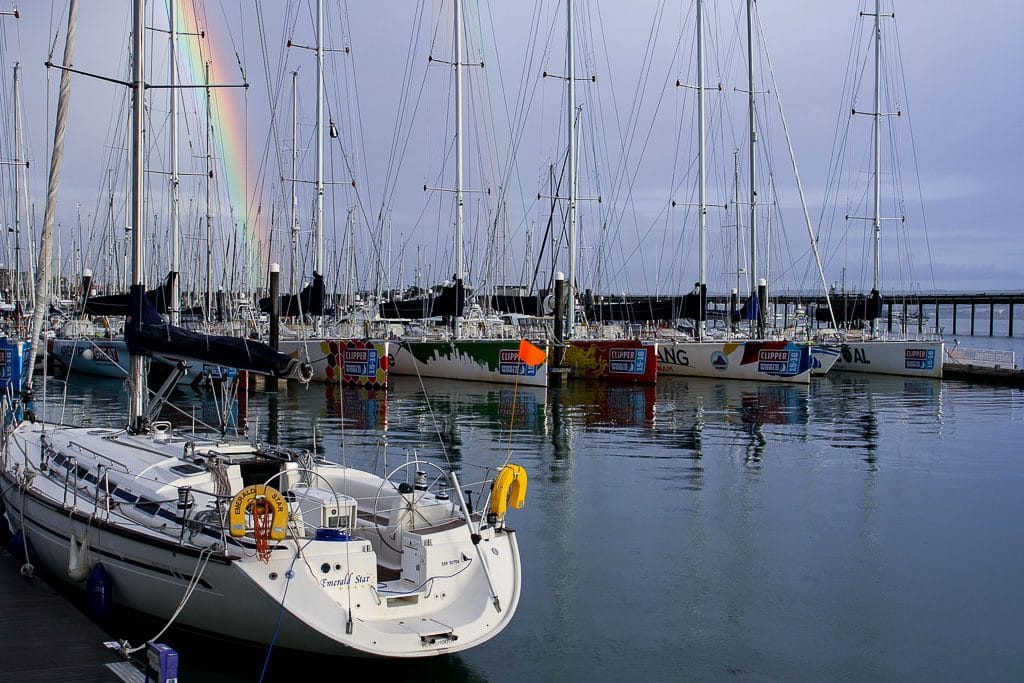
Portsmouth Harbour is one of the best starting points for any Solent passage. You have easy access to the main deepwater channel, a choice of marinas (Premier Portsmouth, Haslar, Gunwharf Quays), and excellent tidal connections west toward the Isle of Wight. Cowes, directly across the Solent, provides everything a cruising sailor needs: sheltered marinas, deepwater moorings, chandlers, pubs, restaurants, and that unique atmosphere of a town that lives and breathes sailing.
Crossing from Portsmouth to Cowes is a proper passage in its own right. It demands that you plan for tides, interpret shipping traffic, and manage a crew through a relatively short but intense piece of navigation. For sailors training toward their Day Skipper or Coastal Skipper certification, this route is almost a required exercise. It tests your ability to read a marina approach, handle a busy shipping channel, and arrive safely in an unfamiliar harbour. That is why any good Portsmouth to Cowes sailing itinerary treats this crossing with the respect it deserves, not as a quick hop but as a genuine passage with real decision points.
The distance from Portsmouth Harbour entrance to Cowes breakwater is about 11 nautical miles. At a cruising speed of 5 knots, you are looking at roughly two and a quarter hours of sailing time. Add in clearing the harbour, hoisting sails, and your approach to Cowes, and you should budget three to four hours from berth to berth. That leaves your first afternoon free to explore.
We run this route regularly on our RYA Day Skipper practical courses. Students get to practice tidal calculations, collision avoidance, and marina berthing in a real-world setting. There is no substitute for doing it for real. A well-planned Portsmouth to Cowes sailing itinerary builds confidence that carries into every future passage you make in the Solent.
Planning your departure: tides and weather
The Solent has a double tide system. Two high waters and two low waters per tidal cycle, thanks to the Isle of Wight splitting the English Channel’s tidal flow. This makes tidal planning different from almost anywhere else in the UK. The tidal window that matters most is the first two hours after leaving Portsmouth Harbour.
Your ideal departure from Portsmouth is approximately two hours before high water Portsmouth. At this point, the flood tide is still running west through the Solent, pushing you toward Cowes. Leave too early, and you fight the last of the east-going ebb. Leave too late, and the tide turns against you before you cross the main shipping channel.
The spring range in Portsmouth reaches 4.7 metres. A Portsmouth to Cowes sailing itinerary must account for spring and neap differences. Neaps run about 2 metres. This difference matters for the strength of the tidal stream, which at springs can hit 3 knots through the main Solent channel. At neaps, it drops to around 1.5 knots. Your Portsmouth to Cowes sailing itinerary needs to account for this. A spring tide departure that is even an hour off can add 30 minutes to your crossing. At neaps, you have a wider window of favourable stream.
Check the Met Office inshore waters forecast at least 48 hours before departure, then again on the morning. No Portsmouth to Cowes sailing itinerary should skip this step. The Solent can produce a Force 4-5 from the southwest in under an hour, particularly when a low pressure system tracks across the Channel. If a Force 6 is forecast, reconsider. The Solent becomes lumpy quickly when wind over tide kicks in, especially south of the Prince Consort buoy.
Visibility is another factor. Fog forms regularly in the eastern Solent between May and September, particularly after warm days and cool nights. If visibility drops below one mile, the shipping traffic around the Spithead anchorages and the Nab Tower approach becomes a genuine hazard. Wait for it to clear. Every sensible Portsmouth to Cowes sailing itinerary should always include a weather abort option. There is no prize for crossing on schedule if conditions are unsafe.
For the latest conditions, check the Met Office inshore waters forecast. We also recommend the Solent Shipping Forecast on VHF Ch 96 for updates while you are under way.
Day 1: Portsmouth to Cowes — the route
You depart your berth in Portsmouth Harbour. Call Portsmouth Queen’s Harbour Master on VHF Ch 11 and request permission to leave. Listen for commercial traffic movements, including the Portsmouth International Port ferries, naval vessels, and the Gosport ferry. All of these cross the harbour entrance.
Once clear of the harbour entrance, lay a course for the Prince Consort buoy (starboard hand, safe water mark). This marks the northern edge of the main shipping channel leading into Southampton Water. Keep the buoy to port as you round it, then head south-southwest toward the main Solent channel. The East Knob buoy and the Bramble Bank are your principal marks. Bramble Bank dries to less than a metre at low water springs, and the tide races over it. Give it a wide berth, at least half a mile.
This route crosses the main shipping channel used by commercial vessels heading to and from Southampton. Keep a sharp lookout. Large container ships and tankers move faster than they appear. A ship doing 15 knots covers a mile in four minutes. Do not cross close ahead. If in doubt, alter course to pass astern and call the vessel on VHF Ch 16 or 12 to confirm their intention.
Once south of the main channel, the water opens up. You can bear away toward Cowes. The breakwater at the entrance to Cowes Harbour is clearly visible. To starboard, the green Royal Yacht Squadron castle marks the outer edge of the harbour. Egypt Point lies about a mile east of Cowes and is a useful check-off mark. If you are east of Egypt Point, you have overshot. A good plan should bring you in on a heading of approximately 270 degrees magnetic off the Prince Consort buoy, adjusted for tide.
The approach to Cowes Harbour has a depth of 2 to 3 metres at low water and about 6 metres at high water. This Portsmouth to Cowes sailing itinerary assumes you check the tide tables before arrival. The entrance between the breakwater and the Squadron castle is straightforward in moderate conditions but can develop a steep chop in a strong southwesterly against the ebb tide. Take the entrance slowly. Med-mooring alongside the town quay is the norm in Cowes, so have your crew briefed on the procedure before you arrive.
For more detail on training that covers this exact passage, see our Day Skipper practical skills weekend. The Solent is one of the best places to learn tidal passage planning, and this route is a core part of the syllabus.
Arriving in cowes: mooring and marinas
Cowes provides several options for overnight berthing. Cowes Yacht Haven is the most central marina, right at the heart of the town. It has dedicated visitor berths, good facilities (showers, laundry, fuel berth), and is a short walk from the High Street. Booking ahead in summer is essential. Shepards Wharf Marina is slightly further up the Medina River, quieter, and often has space when Cowes Yacht Haven is full. The town pontoon along the Parade provides short-stay berthing but is not recommended for overnight in anything but settled weather. The wash from passing vessels can make it uncomfortable.
An alternative is to anchor in the Medina River upstream of the floating bridge (the chain ferry that crosses between East and West Cowes). The holding is good in mud, and the depth is about 3 to 5 metres at high water. You will need your tender to get ashore. For comfort and convenience, book a marina berth. The peace of mind is worth the cost, and the facilities are excellent.
Once tied up, check in at the marina office. This Portsmouth to Cowes sailing itinerary recommends booking ahead in summer. They will need your boat name, length, and expected duration of stay. Most marinas in Cowes offer a discount for RYA members, worth asking about. Electric hookup is available at most visitor berths. Fill your water tanks and note the location of the nearest chandlery (Cowes Chandlery on the High Street) in case you need anything before the return passage.
Exploring cowes: what to see and do
Cowes is divided into East Cowes and West Cowes by the Medina River. West Cowes has the main town centre, most of the pubs and restaurants, and the chandleries. East Cowes has Norris Castle and Osborne House, Queen Victoria’s seaside residence, well worth a visit if you have time.
For food, Shepards Wharf serves excellent pub food with a view over the marina. The Anchor at the top of the High Street is a proper sailors’ pub, reliable and unpretentious. For something smarter, The Coast Bar and Dining Room at Cowes Yacht Haven does good seafood. The Lifeboat on the High Street is a solid choice for Sunday lunch. Book ahead in summer. Everywhere fills up.
If you want a longer walk, head east along the coastal path toward Egypt Point. The views back across the Solent toward Portsmouth are excellent, and there is a decent café at Egypt Point. The walk takes about 20 minutes from the town centre and is a good way to stretch your legs after a day on the helm.
For provisions, the Co-op on the High Street has everything a cruising crew needs. There is a bakery and a butcher on the same street. The Saturday market in the parish hall sells local produce, including Isle of Wight cheese and chutneys. Stock up for the return leg. Every Portsmouth to Cowes sailing itinerary benefits from proper provisioning.
A well-planned Portsmouth to Cowes sailing itinerary leaves you ashore from early afternoon onward on day one. That gives you time for a proper explore, a long dinner, and an early start the next morning. If you want to extend your stay, consider a yacht charter for a longer cruise around the island.
Day 2: sailing back to Portsmouth
The return leg is shorter but has its own challenges, and. Depart Cowes about two hours before high water Portsmouth. The tide will be flooding east, pushing you back toward Portsmouth. This is the mirror of your outward passage. The day two Portsmouth to Cowes sailing itinerary follows the reverse route: out through Cowes Harbour, past the Squadron castle, turn to starboard and head east-northeast.
Keep the Ryde Middle Bank to starboard and the main shipping channel to port. The Ryde Middle Buoy marks the shoalest part of the bank. You can cut inside it in moderate conditions, but the depth drops to 2 metres at low water. Stick to the main channel if you are not local.
Approaching Portsmouth Harbour entrance, call the Queen’s Harbour Master on VHF Ch 11 again. A proper Portsmouth to Cowes sailing itinerary ends with a safe return. Request permission to enter. Watch for the Gosport ferry crossing the harbour mouth. A complete Portsmouth to Cowes sailing itinerary ends when you are tied up back at your berth, but the navigation does not stop until the engine is off and the shore power is plugged in.
Once back, take time to debrief with your crew. What worked? What would you do differently? The best sailors treat every passage, even a short one, as a learning opportunity. This particular crossing is one of those routes you can do a hundred times and still learn something new each trip.
Alternative routes and stopovers
Not every trip needs to be a direct crossing. If you have more than a weekend, or if the tide window does not align, consider these alternatives.
Portsmouth to Bembridge. About 10 miles east of the Solent entrance. Bembridge Harbour has a quiet alternative to Cowes, with a drying harbour, a good pub (The Crab and Lobster), and access to the eastern side of the Isle of Wight. The approach needs careful attention to the drying bar at the harbour entrance. Only attempt this within two hours either side of high water.
Portsmouth to Yarmouth. Head further west for about 18 miles to Yarmouth Harbour. This is a longer passage but rewards you with a picturesque town, good pubs (The Bugle, The King’s Head), and a shorter hop to the Needles the next day. Your Portsmouth to Cowes sailing itinerary can easily be extended to Yarmouth if the tidal gates work in your favour.
Stopover at the Folly Inn. Tied up at the Folly Inn on the Medina River, about a mile upstream from Cowes. This adds a relaxed lunch stop to your Portsmouth to Cowes sailing itinerary. This is a popular spot for a pub lunch or an evening pint. The pontoon is first-come, first-served, and fills up quickly in summer. The food is solid pub fare, and the setting on the river is hard to beat.
Anchor in Newtown Creek. About 4 miles west of Cowes. Newtown Creek is a natural anchorage with excellent holding in mud. It is sheltered from all directions except north. The National Trust owns most of the land around it, so the shoreline is undeveloped and quiet. Dinghy ashore and walk the Old Town trail. It is a peaceful alternative to the Cowes bustle. Many Solent cruisers rate it as their favourite anchorage in the eastern Solent.
Whichever alternative you choose, your Portsmouth to Cowes sailing itinerary benefits from flexibility. The Solent rewards patience. If the weather shifts, adjust your plan. There is always another weekend.
Portsmouth to Cowes sailing itinerary: frequently asked questions
How long does it take to sail from Portsmouth to Cowes?
Under sail in moderate conditions, expect 2 to 3 hours. Under power, about 2 hours. Your Portsmouth to Cowes sailing itinerary should budget 3 to 4 hours from leaving your berth to tying up in Cowes, including clearing the harbour and your approach.
Do I need a VHF radio for this crossing?
Yes. You need VHF to call Portsmouth Queen’s Harbour Master for departure and return, and to monitor Ch 16 for shipping movements in the Solent. A handheld VHF is sufficient but a fixed set with DSC is better. We cover radio procedures on our RYA sailing courses.
What charts do I need?
Admiralty Chart 2045 (Portsmouth to Selsey Bill) covers the area. No Portsmouth to Cowes sailing itinerary should rely on electronics alone. Imray Chart C2 (Solent and adjacent waters) is a good alternative at a smaller scale. An active chart plotter with the latest UKHO updates is fine as a primary navigation tool, but carry paper backups as well. Our Solent sailing guide has more detail on charts and planning.
Can I do this route as a beginner?
If you have completed your RYA Day Skipper practical, you have the skills for this passage. A Portsmouth to Cowes sailing itinerary is an ideal first post-course passage. The crossing involves tidal planning, collision avoidance in a busy shipping channel, and a marina approach in tidal conditions. These are exactly the skills a Day Skipper qualification teaches. If you are still building experience, consider doing this passage with an instructor first. Our Day Skipper practical weekend includes this route. For an overview of all our options, see our sailing courses page.
Is Cowes busy in summer?
Very. Cowes Week (early August) draws hundreds of yachts. The town is packed, marinas are full, and pubs are standing room only. If you want a quieter experience, visit in June or September. The trip will be more relaxing outside the peak events, and you will have more choice on moorings.
What is the best time of year for this trip?
late May through September.
Late May through September has the best combination of daylight, settled weather, and reasonable water temperature. April and October are possible but dress for cold. The Solent in a brisk northwesterly in October is a different proposition to July. Check the long-range forecast and have a contingency plan.
Can I extend the trip to the Needles?
Yes. From Cowes, the Needles are about 12 miles west. You can sail there on day two instead of returning to Portsmouth, then return on day three. That makes the trip a long weekend rather than a two-day passage. See our Solent sailing guide for more route ideas.
What if the weather turns bad?
Abort and wait. Portsmouth and Cowes are both all-weather harbours. There is no shame in staying put. A day in Cowes waiting for better weather is better than a miserable beat into a Force 6. The Solent will still be there next weekend. Building flexibility into your plan accounts for this.
Where should I eat in Cowes?
Shepards Wharf for pub classics, The Coast Bar for seafood, The Anchor for a proper sailors’ atmosphere, The Lifeboat for Sunday lunch. Book ahead in summer.
This guide was written by Tom and Jonno, RYA Yachtmaster Instructors and joint owners of Commodore Yachting.
For RYA course information and booking, visit the RYA courses and training page.


