
You are not too old to learn

I hear it all the time. Someone in their forties, sometimes their fifties, tells me they have always wanted to learn to sail but worried they left it too late. Learning to sail at 40 feels different from learning in your twenties, they say. More intimidating. More impractical. Like you missed the window. I understand the feeling. But I have also watched enough students step onto a yacht for the first time at 40, 45, even 55, and walk off five days later as competent crew, grinning, already planning the next course. Learning to sail at 40 is not a compromise. In some ways it is actually better.
At Commodore Yachting, based at Premier Gosport Marina on the Solent, Tom and I teach adults at every stage of life. Most of our students are over 30. Plenty are over 40. A significant number are over 50. The idea that sailing is a young person’s sport is a myth, and one I am happy to dismantle. Learning to sail at 40 brings advantages that a twenty-year-old simply does not have: patience, perspective, the ability to ask the right questions, and a genuine desire to be there because you chose to be, not because someone told you to.
This guide covers what learning to sail at 40 actually looks like. The concerns you will have. The courses that work best. How to fit training around a life that already has commitments. And why, honestly, you are probably better equipped for this than you realise.
Why learning to sail at 40 works so well
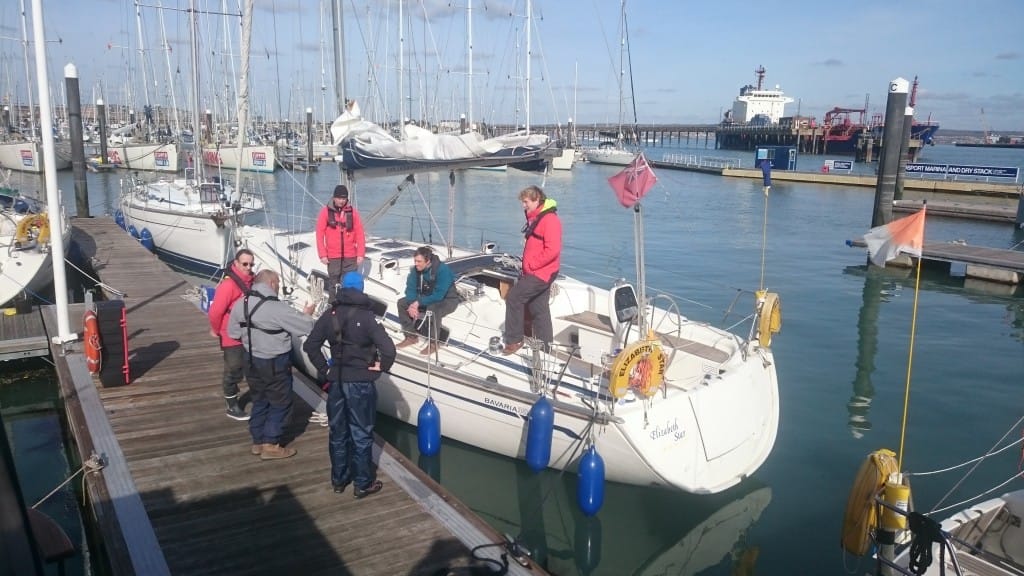
The thing people miss about learning to sail at 40 is how much life experience carries over. Sailing is not just physical. Yes, there is hauling on ropes and grinding winches and moving around a moving boat. But a lot of sailing is about decision making, risk assessment, communication, and staying calm when things go sideways. If you have spent twenty years managing projects, raising children, running a business, or any career that demands you keep your head while others lose theirs, you already have half the skills.
I notice it every time. Younger students often have better physical fitness but worse emotional regulation. The wind picks up, the boat heels, and they panic. An adult in their forties has been through enough real stress to know the difference between an emergency and an inconvenience. Spray coming over the bow is the latter. Learning to sail at 40 means you bring calm to the cockpit, not panic. That is worth more than any amount of gym training.
There is also the financial side. Learning to sail at 40 usually means you have disposable income. RYA courses are not cheap. Competent Crew runs about £599, Day Skipper about £699. At 25, that is a big decision. At 40, it is a purchase you can make without stretching yourself. You can afford the gear. You can afford the course. You can afford to book a second week when the first one ends. That changes the experience entirely. You are not worrying about money. You are just learning.
Common concerns from adult learners
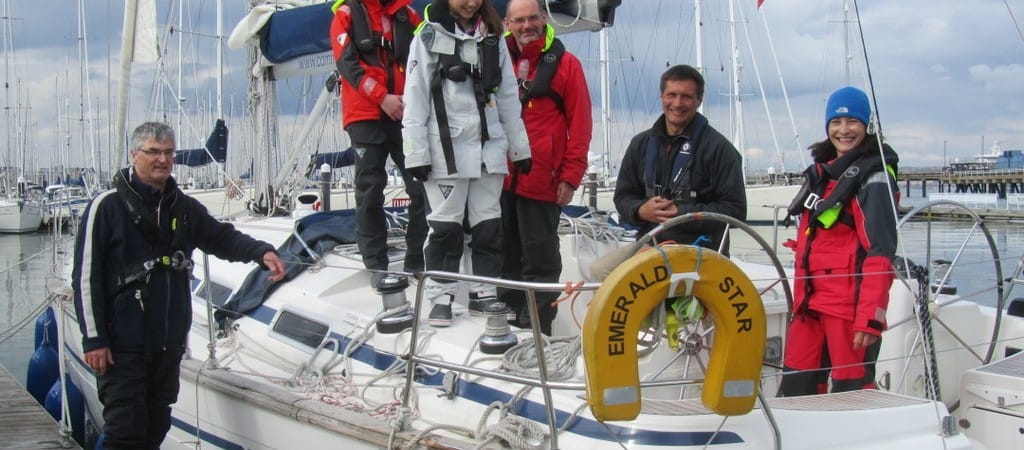
I want to address the worries I hear most often, because they are nearly universal, and nearly always wrong.
“I am too old to learn new things.” You are not. The adult brain learns differently from a younger brain, but not worse. Adults learn by connecting new information to existing frameworks. You have more frameworks. Sailing will make sense to you faster because you understand systems, cause and effect, and the value of procedure. The number of adults I have taught who say “I wish I did this years ago” is enormous. None of them said “I wish I started younger” after the course. They said “I am glad I finally did it.” Learning to sail at 40 works because you are ready for it in ways you were not at 20.
“I am not fit enough.” You do not need to be. Sailing requires some physical effort but nothing extreme. If you can climb a flight of stairs without getting winded, you can handle a Competent Crew course. The RYA syllabus is designed to be accessible. Instructors adapt to your fitness level. Nobody expects you to haul yourself up the mast or winch in the genoa in a gale. On a modern Bavaria yacht with decent winches, most sail handling is manageable for anyone. If you have specific mobility concerns, tell us before the course. We have taught students with bad knees, bad backs, and everything in between. We work around it.
“I will be the oldest person on the course.” Almost certainly not. The average age on our courses is probably late thirties. I have taught groups where everyone was over 45 and the youngest person was the instructor. Sailing attracts people later in life. It is a hobby that requires patience, money, and free time, all of which tend to accumulate with age. You will not stand out. You will fit right in.
“I do not have time.” This one I take seriously because it is usually true. Learning to sail at 40 means squeezing a course into a schedule that already has work, family, and obligations. But the RYA practical courses are five days. One week. You take annual leave, you go sailing, you come back qualified. It is a concentrated investment, not a long term commitment. I cover this more in the balancing section below.
The best RYA courses for adult beginners
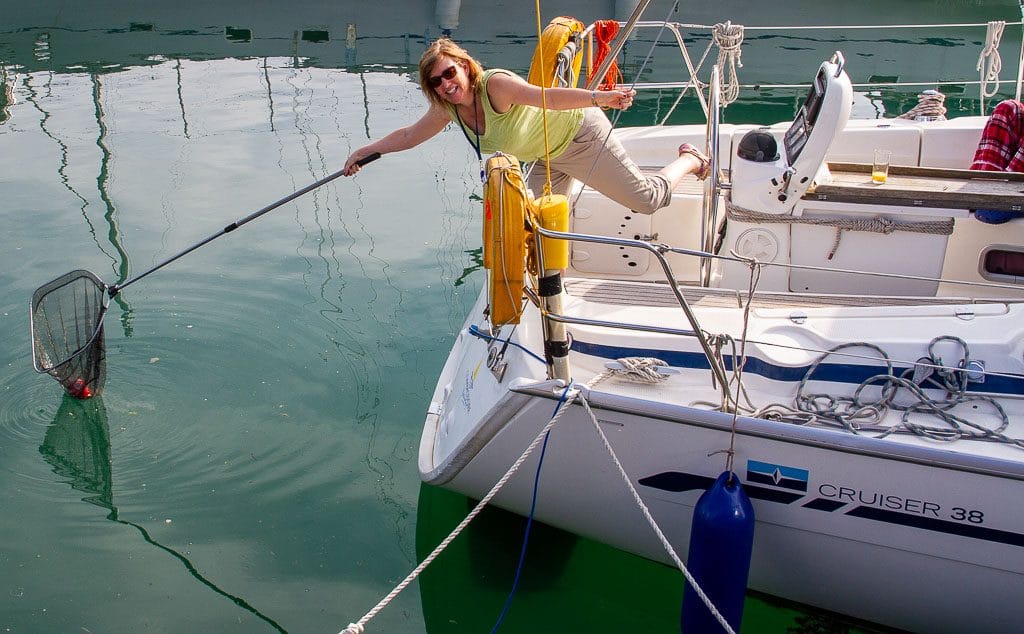
For anyone learning to sail at 40, the starting point is almost always the same. The RYA Competent Crew course. Five days living aboard a Bavaria yacht, learning everything from sail handling to navigation to safety procedures. No prior experience needed. You show up, we teach you the rest.
I recommend Competent Crew for every adult beginner regardless of their background. The course is structured so you build skills progressively. Day one is basics: parts of the boat, safety briefing, how to start the engine. By day three you are helming in open water. By day five you are a competent crew member ready to join any yacht. It works because it is immersive. You sleep on the boat, eat on the boat, learn on the boat. There is no classroom disconnect. Everything you learn, you immediately apply.
The learning to sail at 40 experience on Competent Crew is different from what a twenty-year-old gets. You ask better questions. You understand why things matter, not just how to do them. When an instructor explains tidal streams, a 40-year-old connects it to real consequences because they have enough life experience to know that details matter. That depth of understanding makes the learning stick longer. I have taught adults who retained more from one week than some younger students retained from three.
After Competent Crew, the natural next step is the RYA Day Skipper Practical course. This is where you move from crew to skipper. You plan passages, make decisions, manage the boat and crew. It is a significant jump in responsibility but the best part is that you do it with an instructor there to catch your mistakes. For someone learning to sail at 40, Day Skipper is where your life experience really pays off. Decision making under pressure, managing people, prioritising tasks: these are skills you already have. You are just applying them to a new context.
Many of our adult students book the two-week combination: Competent Crew followed immediately by Day Skipper. It is efficient. You build momentum, your instructor knows your strengths by week two, and you leave with two qualifications in ten days. I am biased, but I think it is the best possible start to a sailing career, whether you plan to charter, buy a boat, or just crew for friends. You can see all available dates on our course calendar.
For some adult beginners, the full range of RYA sailing courses offers alternative entry points. You might start with an RYA Start Yachting weekend if you want a shorter taster. You might go straight to Day Skipper if you have dinghy experience. But for most people starting from zero, Competent Crew is the right call. I have never met anyone who regretted starting there.
Balancing training with work and family
This is the practical barrier that stops more people than anything else. Learning to sail at 40 is rarely a solo decision. You have a job. Maybe a partner. Maybe kids. Taking a whole week off is not trivial. I get it. I have had students who saved up annual leave for two years before booking. I have had parents who scheduled their course around school holidays and childcare swaps. It is a logistical puzzle and I respect anyone willing to solve it.
Here is the honest answer: a five-day liveaboard course is the most time efficient way to learn. You are not commuting to a classroom every evening. You are not taking weekly lessons that drag on for months. You disappear for one week, you come back with a qualification. It is intensive but it is efficient. For learning to sail at 40, that efficiency matters. You cannot afford to stretch learning over six months when you have other priorities.
Some students worry about staying in touch with work. Our yachts have phone reception in most places on the Solent. You can check emails in the evening. But honestly, the best students are the ones who switch off completely. Your inbox will survive five days without you. The Solent tides will not wait while you take a conference call. Commit to the week. The break from normal life is part of the value.
If you cannot take a full week, we offer weekend courses and modular options. The Day Skipper weekend skills course is popular with people who cannot get the time off. It is not a substitute for the full five-day practical but it helps you build specific skills you need before the main course. Some students do a weekend course first to test the water, then book the full week later. For learning to sail at 40, that can be a smart way to manage risk. You try it. You like it. Then you commit.
Success stories: adults who learned later
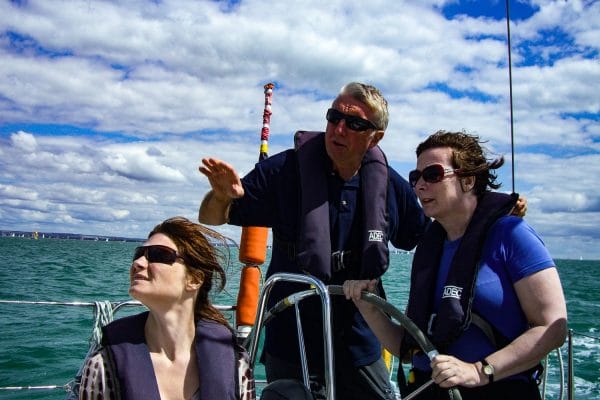
I want to tell you about some of our students because their stories are more persuasive than anything I can say about learning to sail at 40.
A few years ago I taught a man who booked his Competent Crew course for his 50th birthday. He had wanted to sail his whole life but always found a reason not to. Work was busy. The kids were young. Money was tight. By 50, he realised the reasons would never stop coming. He just booked it. He arrived nervous, admitted he had never even been on a sailboat, and by day four he was helming through the Solent with a grin that did not fade for the rest of the week. He is now a Day Skipper and charters with his family every summer. That is learning to sail at 40 done right: not early, but on time.
I taught a woman in her mid-forties who signed up after her kids left for university. She said she spent eighteen years driving them to football and music lessons and finally wanted something for herself. She was terrified on day one. Seasick on day two. By day five she asked about the Yachtmaster pathway. She is now a Coastal Skipper and crewed across the Atlantic last year. Learning to sail at 40 gave her a second life on the water.
Then there is the couple who did their Competent Crew together for their 20th wedding anniversary. Both in their late forties, neither had sailed before. They treated it like an adventure holiday and approached every task as a team. Watching them work together on deck was genuinely heartwarming. They now own a share in a yacht and spend most summer weekends on the Solent. Learning to sail at 40 together turned into a shared hobby that strengthened their relationship.
I do not tell these stories to sell you on the dream. I tell them because the common thread is that nobody regretted waiting. They regretted the waiting itself. But once they started, the age question evaporated by lunchtime on day one. Learning to sail at 40 was never the obstacle they thought it was. The obstacle was deciding to book.
Frequently asked questions
Is 40 too old to learn to sail?
No. Forty is not too old. Fifty is not too old. Seventy is not too old. The RYA has no upper age limit on any course. Sailing is a low impact activity that most people can do well into old age. Learning to sail at 40 puts you well within the normal range for adult beginners. You will not be the oldest person on your course. You will probably not even be close.
How long does it take to learn sailing from scratch at 40?
The RYA Competent Crew course takes five days. By the end of that week you can crew on any sailing yacht. To become a confident skipper, most people need the Day Skipper course as well, which is another five days. Many students do both in two consecutive weeks. After that, the real learning comes from practice. Learning to sail at 40 is fast because you focus. You are not distracted by exams or social pressures. You are there to learn.
Do i need to be physically fit to start sailing at 40?
Reasonable fitness helps but is not a requirement. You need to be able to move around a moving boat, climb a companionway ladder, and assist with sail handling. If you have specific concerns, contact us before booking. We have taught students with limited mobility, chronic conditions, and various physical challenges. The course adapts, not the other way around.
Can i learn to sail while working full time?
Yes. The practical courses are five consecutive days. You take a week of annual leave and complete the course. Some students do weekend taster courses first to see if they enjoy it. The Day Skipper weekend skills course is designed for working professionals. Learning to sail at 40 while working full time is standard for our students. Most of them manage it without any problem.
What happens if i get seasick?
Seasickness affects many new sailors regardless of age. We keep motion sickness tablets on board. Most people adapt within 48 hours. I have seen students who spent day one hanging over the rail become the most enthusiastic crew members by day three. Do not let the fear of seasickness stop you. It passes.
How much does learning to sail at 40 cost?
The RYA Competent Crew course at Commodore Yachting costs from £599. This includes accommodation on board, all meals, course materials, RYA certification, and wet weather gear. Day Skipper is from £699. Compared to many hobbies, sailing training offers excellent value for the depth of skill you gain. Learning to sail at 40 is an investment in a skill that lasts a lifetime.
Can i bring my partner or a friend?
Yes. We have couples and friends who train together regularly. Doing the course with someone you know makes it more enjoyable and gives you someone to practice with afterwards. We can usually accommodate two people from the same booking on the same course date.
What is the next step after competent crew?
The natural progression is RYA Day Skipper, followed by Coastal Skipper and Yachtmaster. You can charter yachts with a Day Skipper qualification. Many of our learning to sail at 40 students aim for Day Skipper as their first major milestone. From there, the options are wide open. You can read more about the full pathway on the RYA courses and training page.
About the author
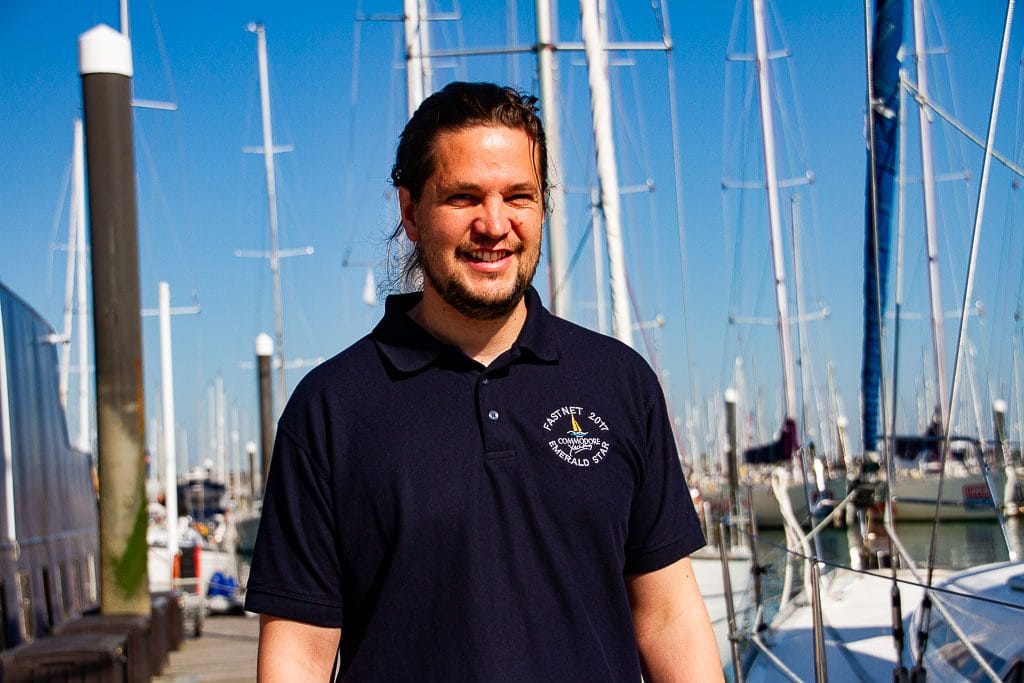
This guide was written by Tom and Jonno, RYA Yachtmaster Instructors and joint owners of Commodore Yachting.


